

Posted on

Build It and They May Not Come

Field of Dreams. Photo (2006). Madmaxmarchhare of English Wikipedia. Wikimedia Commons.

I decided to become my own publisher (Yooper Publications) when I realized I was going to write an entire series of walking tour books based on European cities and their historical events and historical periods of time.

I’ve learned a lot

I entered the fifth and final phase of the publishing spectrum the moment we published (and picked up) the first book, Where Did They Put the Guillotine? —A Walking Tour of Revolutionary Paris (1789–1794)–Volume One. This final component is the marketing and public relations portion of my journey. In other words, getting people to become aware my books exist. You remember the movie where they build the baseball field in the middle of the Iowa cornfield? It was the “build it and they will come” type of mentality. Well, not true in the case of trying to sell one’s book in an industry where 2.2 million books come on the market each year (walk through Books A Million sometime and take a look at the competition—that should sober up every aspiring author). Read More Build It and They May Not Come
Posted on

A River Runs Through It (and Under It)

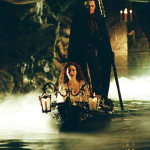
Sewer Scene. Phantom of the Opera.
Phantom of the Opera.

Most of us are aware of the underground sewers of Paris (think: Phantom of the Opera), the underground limestone quarries known as the Paris Catacombs (the final resting place of more than 6 million former citizens), and the underground subway system known as the Métro.

Yet there is another hidden wonder of the Parisian underground. It is the ancient river called Bièvre (or Beaver River). Its origin is a spring fed brook located in Guyancourt, approximately 21 kilometers (13 miles) from Paris. It is southwest of Paris and near Versailles. The Left Bank river enters Paris near the Stade Sébastien Charlety on the border of the 13th and 14th arrondissements. Its terminus is into the Seine River right below the Métro Bridge next to Gare d’Austerlitz. However, the whole time the river flows through Paris, it is completely underground, covered up by concrete.

This river was used by Neolithic tribes, the Parisii tribe, the Romans, and finally, the city of Paris. It was the second most important river to Paris next to the Seine. After Philippe II Augustus built the Left Bank wall in 1210 to protect the city from southern attacks, the Bièvre was isolated outside the city limits. One of its uses was to supply water for irrigation to an abbey as well as fortifications.

As the city grew, the area the Bièvre flowed through became very heavily industrialized. This was the area known as Faubourg Saint-Marcel. This faubourg (suburb) was a working class neighborhood that supported tanneries, textile manufacturers, dye-makers, millers, cobblers, and other assorted industries. The factories built up on its banks dumped garbage, pollutants, dyes, acidic materials, and downright nasty stuff into the river. Then the Industrial Revolution hit and it got even worse. Read More A River Runs Through It (and Under It)