I Prefer Blondes
For my entire life, I’ve always been attracted to strong women (preferably blonde). Okay, now my secret is out. So as not to get into trouble, it’s the stories of strong blonde women that I’m attracted to. For some reason I turned to Virginia Postrel’s article in USA Today (August 8, 2014) entitled, History’s 7 Most Glamorous Women. What caught my eye was the woman she named number one: Marie Curie.
The Strong Ones
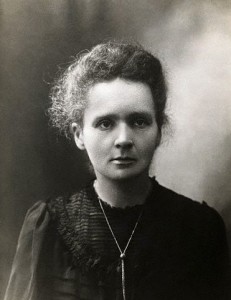
I’m very familiar with the story of Marie Curie (#1). She was responsible for the discovery of radiation (she coined the term radioactivity) and x-rays. Madame Curie shared the 1903 Nobel Prize in physics with her husband and she won outright the 1911 Nobel Prize in Chemistry. She died in Paris (1934), likely of radiation poisoning from the x-rays she performed during World War I. Madame Curie is the only woman buried in the Pantheon based on the merits of her own achievements. Based on the pictures I’ve seen of Madame Curie, I would not put her in the bucket called “glamorous.” By the time I got through the remaining 6 names, I figured out that by “glamorous,” what Ms. Postrel really meant is “strong.” While I wouldn’t necessarily disagree with Ms. Postrel’s identifying these individuals as strong women, I would perhaps come up with some other women to put in their place or at the very least, to join them on the list. I guess it could be a toss up between Joan Crawford (#7) and Bette Davis. Or how about Barbara Stanwyck and Mary Pickford? Clearly, this is the entertainment category. Read More Virginia Postrel’s 7 Most Glamorous Women in History