
Posted on

La Révolution Français – The Economics of Eating Cake

Stew’s Introduction

I’m very pleased to have Mark Vaughan as our guest blogger today. Mark’s blog is about the economics of the French Revolution and I hope you connect the tag line to Marie Antoinette and her misquoted, “Let them eat cake.” Mark is a Ph.D. economist and was recently asked to put together a seminar on the economics of the French Revolution. I thought an abbreviated discussion might be interesting as this topic is rarely (if ever) discussed in the history books. While we knew the crops failed and France was on the verge of bankruptcy at the time, little do we understand the country’s overall economy and the direct effect it had on the Revolutionaries. More on Mark and how we met a little later on.
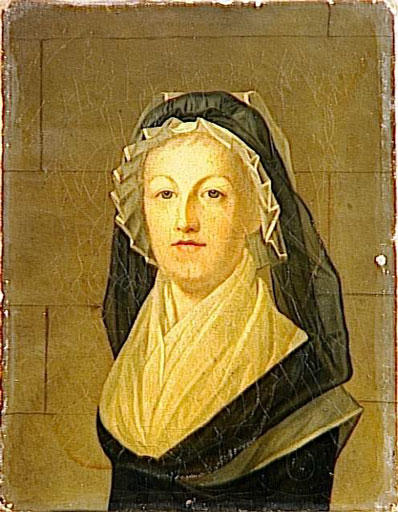
Marie Antoinette in the prison Conciergerie. Oil painting by Alexander Kucharsky (1793). Palace of Versailles. PD-100+. Wikimedia Commons.

The French Revolution fascinates because of the fascinating characters and headline events.  Thanks to Stew, anyone can stand in the exact spot where a shivering, prematurely gray widow, apologized to her executioner for stepping on his foot.  But what if something more pedestrian than Marie Antoinette and the guillotine drove events?

Around the Revolution’s bicentennial, economists began applying their craft to late 18th century France.  This research suggests basic economic principles explain much of the Revolution’s dynamics – principles like governments must pay their bills, politicians respond to interest groups, printing money causes inflation, and price controls produce shortages. Read More La Révolution Français – The Economics of Eating Cake
Posted on

A Pre-War Paris Lesbian Nightclub

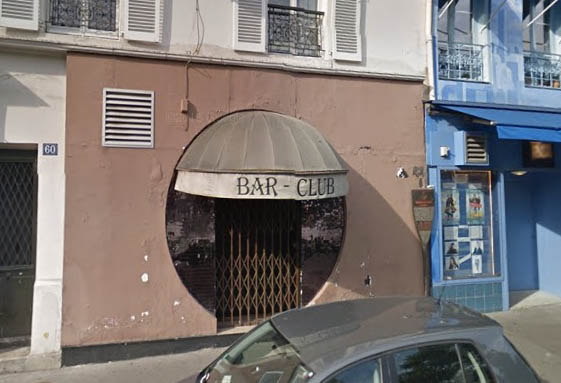
Exterior entrance to the former Le Monocle nightclub. Photo by anonymous (date unknown).

For those of you familiar with Paris, you know that the Left Bank is considered more cutting edge today than the Right Bank. If you lived in Paris during the 1920s and the 1930s, the avant-garde scene would have been on the Right Bank. In particular, the Montmartre and the Pigalle districts (18e) were heavily populated with artists, bohemians, and a strong gay community. However, the Left Bank was home to the first and most popular lesbian nightclub in Paris. Located at 60, Boulevard Edgar Quinet in the Montparnasse (14e) district, Le Monocle opened its doors in the 1920s. Our story today isn’t so much about the nightclub as it is one of its most infamous patrons.

Lulu and Tuxedos

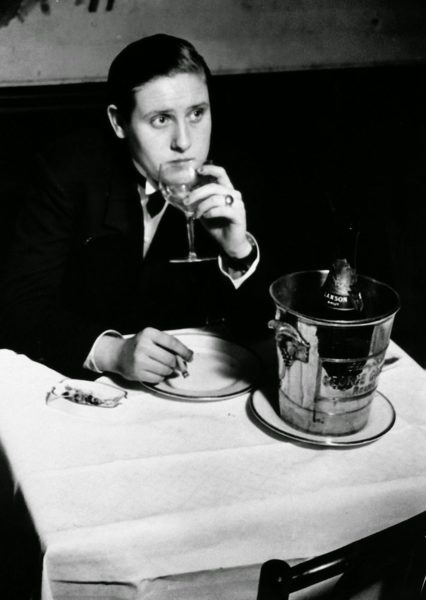
Young invert at Le Monocle, 1932 (it is believed to be a photo of Lulu). Photo by George Brassaï (c. 1932).

The first owner of Le Monocle was Lulu. She set the style of dress for the club over the next twenty years. Lulu’s club attracted women who liked to dress up in tuxedos (and men’s suits), cut their hair short, and for added effect, wear monocles (ergo, the name of the club). In fact, women would wear a monocle in public to announce their sexual orientation.

The nightclub was shut down in 1940 after the Germans invaded France. Gay men and women were targeted by the Nazis for detention, deportation, and ultimately, elimination. The building where the club was located is still in existence. You enter through the original entrance which is shaped in a circle–it was meant to imitate a monocle. I’m not too sure what is behind the doors, as the exterior needs a lot of paint. But the awning still advertises a bar and café. I think it’s still called Le Monocle but Sandy and I will stop by on our next trip to Paris and see what happens. Read More A Pre-War Paris Lesbian Nightclub