
Note: My sister-in-law once told me how the title of this prior blog (October 2014) caught her eye and she was compelled to read it. When we looked at the number of people who visited the blog, it confirmed there was a lot of interest. So, we decided to reprint the blog (albeit in an expanded version). Hope you enjoy it!
My previous blog was about a male musician (Jim Morrison) so I thought I’d give equal time to a female musician. One of Cyndi Lauper’s more popular songs was, “Girls Just Want to Have Fun.” I thought of this song as I was researching Pauline Borghèse (aka Pauline Bonaparte—Napoléon’s sister). Actually, I’m listening to Cyndi’s CD while writing this blog. As we’ll see, Pauline was just a girl wanting to have fun. Watch Cyndi Lauper’s music video here.
Did You Know?
I have no idea if these quotes, habits, or known facts about Napoléon are true. But it’s fun to speculate:
* “The Little Corporal” wasn’t that short at 5 feet 7 inches. The problem was his bodyguards towered over him and so he was considered short.
* Napoléon cheated at cards and all other games—he hated to lose. I’ve always said, it’s good to be king or in this case, emperor.
* The Emperor loved long, hot baths. See below.
* Napoléon was extremely superstitious. He was once asked if he wanted smart generals. He responded by saying no, he wanted lucky generals.
* As a warm-up for the next four habits: Napoléon liked to pinch people—both men and women.
* Prior to returning from his travels, Napoléon always wrote to his wife (or mistresses) instructing them not to bathe until he returned. Was this because he loved long, hot baths with a companion or was it a smelly fetish?
* As a lover, Napoléon wrote to Josephine once, “Take wing and come, come … A kiss on your heart, and one much lower down, much lower.”
* Continuing with Napoléon’s dirty talk—the 19th-century version of sexting: he once wrote a woman “How happy I would be if I could assist you at your undressing.”
* Finally, great speculation has been passed down for more than two hundred years that Napoléon’s penis was whacked off during the autopsy and given to a priest. Fake news about his dismembered member or was he a Bone Apart? Watch more here.
Let’s Meet Pauline
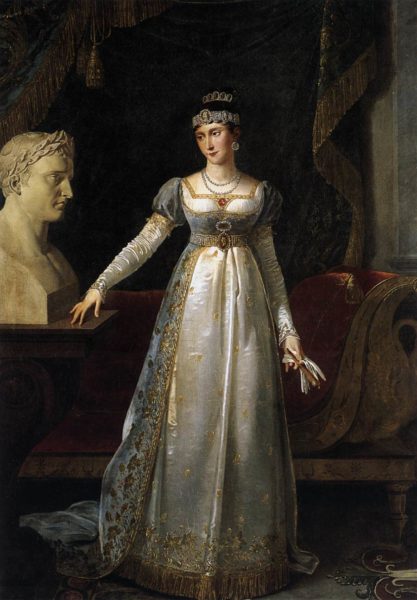
Pauline Bonaparte (1780–1825) had quite a life while living in Paris and Rome. Never one to hold political or society ambitions (she basically owed her society existence to her brother’s position), Pauline’s life was one of moving from one affair to another (being married never stopped her). Simply put, Pauline just wanted to have fun. She was very loyal to her brother as evidenced by her moving to Elba to be with Napoléon during his first exile (along with her mother, they were the only family members to do so). She liquidated her assets to support him during this time. After Napoléon’s defeat at Waterloo and ultimate exile, Pauline moved to Rome under the protection of the Pope. Read More Cyndi Lauper and the Naked Princess