

Posted on

The Sussex Plan and a Very Brave Woman

Insignia of Plan Sussex 1944. Photo by Sussex 44 (2016). With gratitude to Dominque Soulier and Collection SUSSEX 1944 – MM PARK – 67610 La Wantzenau. PD-Creative Commons Attribution-Share Alike 4.0. Wikimedia Commons.

Remember the “rabbit hole” I talked about in a recent blog post (click here to read Curious George Flees the Nazis)? Well, I went down the rabbit hole for a week and popped back up with the relatively forgotten story of The Sussex Plan and its one hundred twenty brave agents. What initially grabbed my attention was the address in Paris of an established safe house used to shelter more than forty agents. It will be a stop in my new book.

The story and memory of The Sussex Plan and its agents are kept alive by Dominique Soulier and the MM Park France Museum (twelve miles north of Strasbourg France). M. Soulier is the son of Georges Soulier, a former Sussex Plan agent.

SOE and Resistance Efforts

By mid-1943 the Nazis had successfully infiltrated and crippled the efforts of the British run Special Operations Executive (SOE) organization (click here to read Women Agents of the SOE). The same could be said for some of the larger French resistance networks when their leaders were arrested, interrogated, and tortured. If these men and women survived the torture, they were either killed by the Gestapo, committed suicide, or deported under the Nacht und Nebel decree (click here to read Night and Fog).

About this time, General Eisenhower and Prime Minister Churchill had agreed upon an invasion of Europe for some time in 1944. To plan properly for the invasion, Eisenhower needed information on German troop movements and other surveillance facts, particularly in northern France. However, the SOE and its agents in France could not be counted on to accomplish what was needed. So British MI6 created a new organization called The Sussex Plan and its mission was to gather information to assist in the planning of D-Day. Read More The Sussex Plan and a Very Brave Woman
Posted on

One of France’s Little Secrets

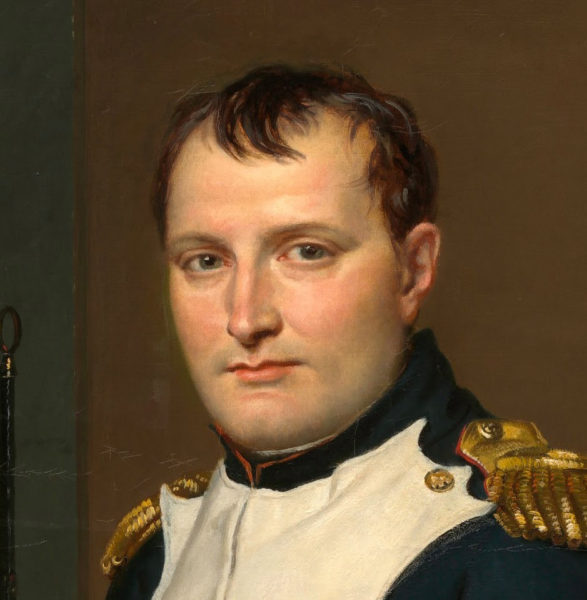
Crop of The Emperor Napoléon in His Study at the Tuileries. Painting by Jacques-Louis David (1812). National Gallery of Art. PD-100+ Wikimedia Commons.

One of the things that France keeps a very low profile about is the fact that French aristocracy did not disappear with the French Revolution. Yes, it was thinned out by Madame Guillotine but enough of them survived so that more than 220 years later, the nobility population (la noblesse) is about the same as before the Revolution.

Contemporary Aristocracy

You don’t hear much about the contemporary nobility today. Many of the families can trace their origins to the Middle Ages. The de Vogues family dates back to the 12th-century and their forefathers were likely members of the king’s court. However, like most of la noblesse, the de Vogues family tries to not attract attention to their historical or hereditary status. Why?

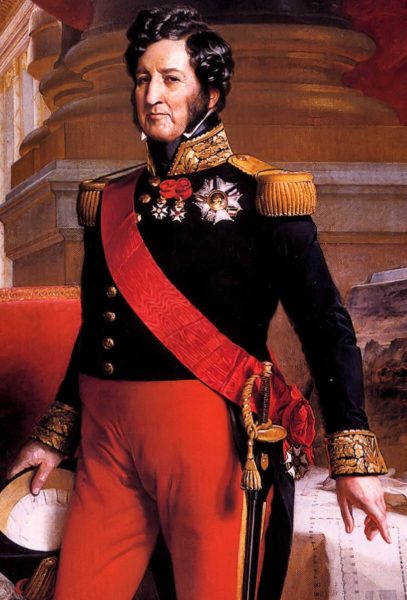
King Louis-Philippe. Map: Painting by Franz Xaver Winterhalter (2006). PD- 100+ Wikimedia Commons.

France is a republic. In fact it’s on its Fifth Republic. Read More One of France’s Little Secrets