Our blog today was originally scheduled to be published on 4 January 2025. What was supposed to be a short “vacation,” turned into an unanticipated one-year sabbatical for us. We had three major events affect us in 2025, but I won’t bore you with the details. Suffice to say, our most recent move back to the Nashville area is behind us and we can focus once more on the blogs and publishing Volume 2 of Where Did They Put the Gestapo Headquarters?
During this time off, we made the decision to take our books off Amazon (again, I won’t bore you with the details). While the Kindle version can be purchased on Amazon, the physical books will have to be purchased directly from us. We will pay the postage for shipping within the United States, and the books will be autographed with a personal comment. All it takes is an email to us (stewross55@gmail.com or tennsandy@gmail.com) and we will get the book(s) to you. (International shipping has become quite expensive with no guarantee the books will arrive.)
Sandy and I appreciate your patience with respect to the extended time we were “off the grid.” I tried to keep up with the correspondence from our readers but unfortunately, I wasn’t quite as prompt as I usually am with my replies. At this point, I believe I have responded to everyone but if you sent us a comment or question and haven’t received a response, please email me and I will rectify the oversight.
With that, let’s resume where we left off.
Today we’ll move away from the European theater and talk about an important mission that took place shortly after the attack on Pearl Harbor on 7 December 1941. It’s an incredible story not only because of the bravery (and sacrifice) of eighty men but the psychological effect it had on the Japanese.
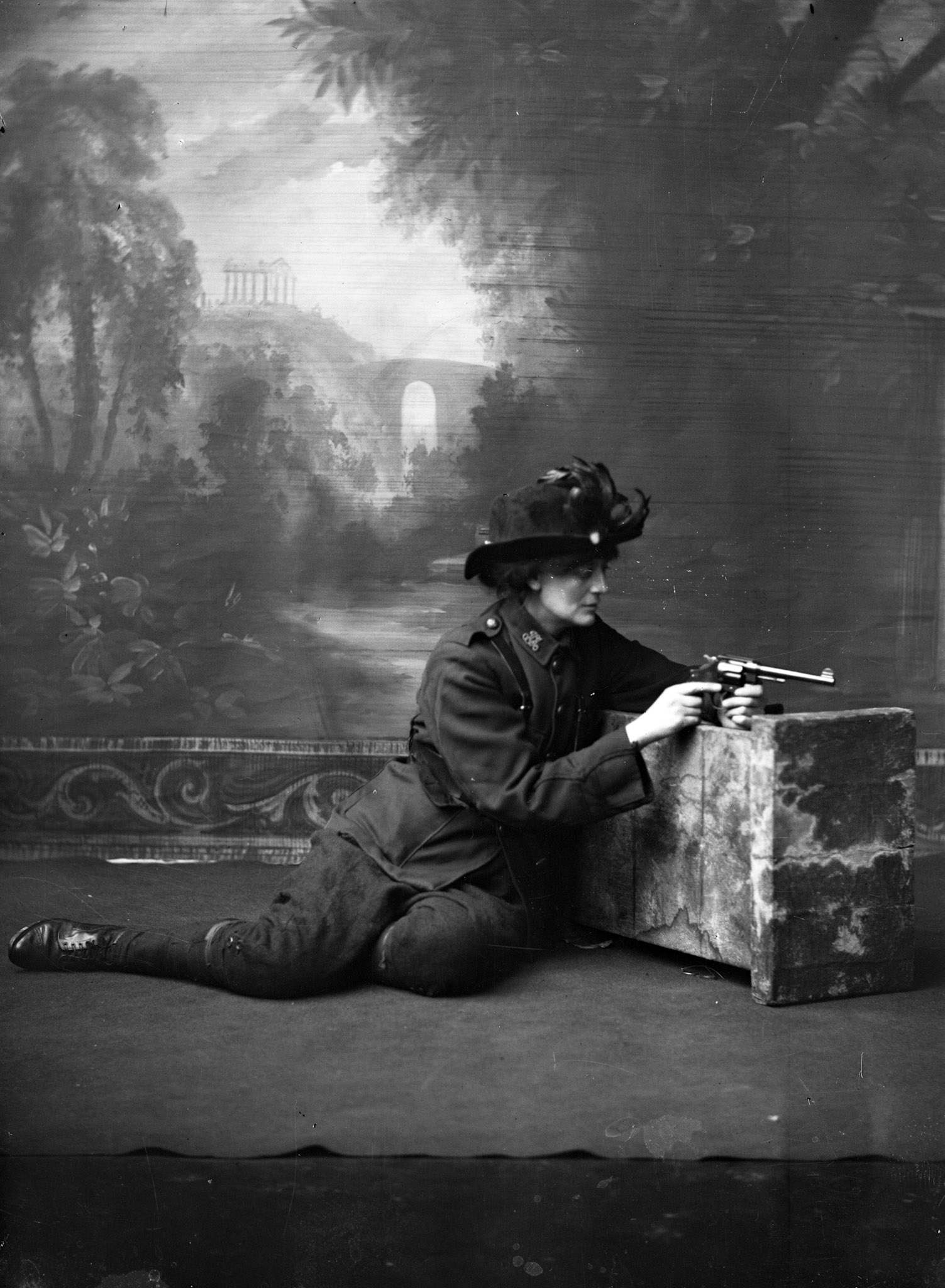
Dress suitably in short skirts and strong boots, leave your jewels in the bank, and buy a revolver.
⏤ Countess Constance Markievicz
Constance Markievicz, a revolutionary, socialist, and suffragette, played a role in the 1916 Easter Uprising during the Irish Rebellion
Did You Know?
Did you know that a brown bear fought alongside the soldiers of the 22nd Artillery Supply Company of the Polish II Corps? The cub bear was named “Wojtek” after his Iranian owner traded him to the Polish soldiers in exchange for an army knife and some candy. Private Wojtek learned quickly and after the company was reassigned to the Italian theater, Wojtek carried shell and ammo crates across the battlefield of Monte Cassino. For his efforts, Wojtek was promoted to the rank of corporal and the company changed its insignia to a bear holding an artillery shell.

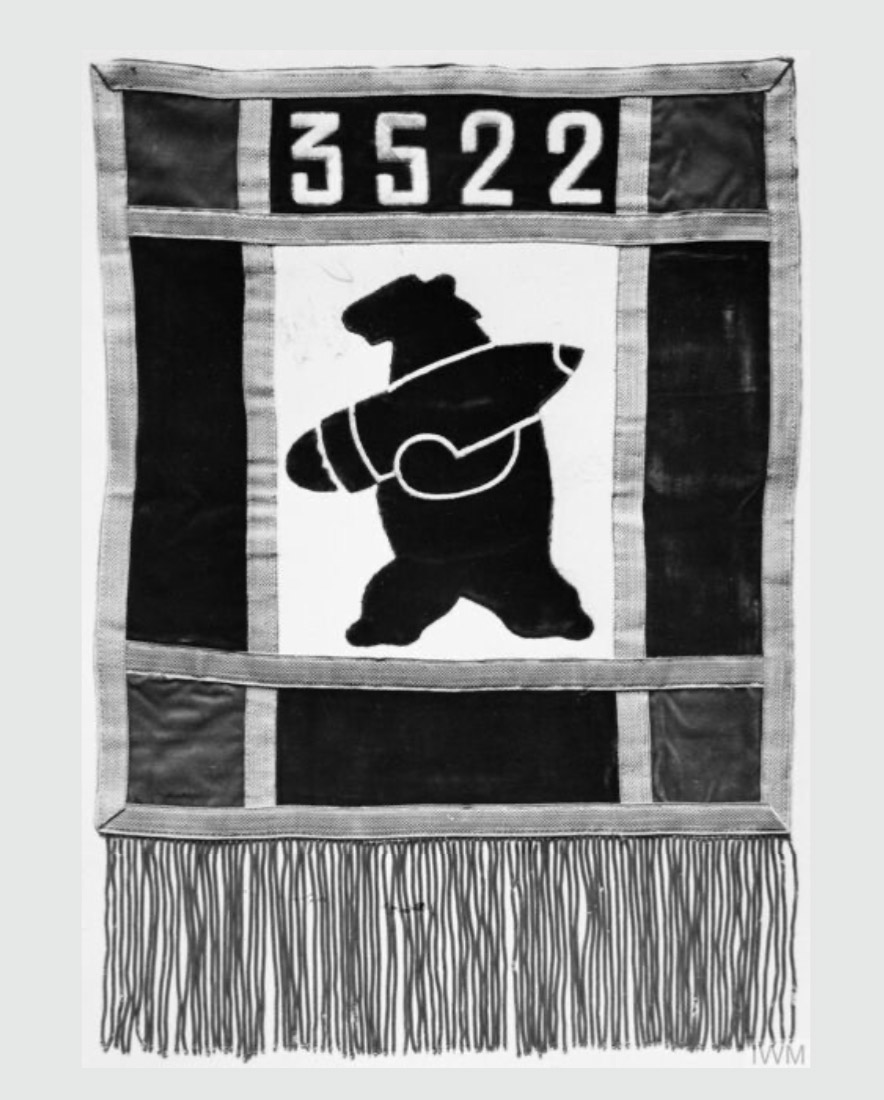
After the war, Corporal Wojtek was mustered out of the service and retired to the Edinburgh Zoo in Scotland. Wojtek died in 1963 but has been commemorated around the world with statues. The most famous one stands outside the zoo along with a statue of a Polish soldier. If you visit the zoo and pass by Wojtek, make sure you rub his shiny bronze nose to show him your appreciation.

The Doolittle Raid
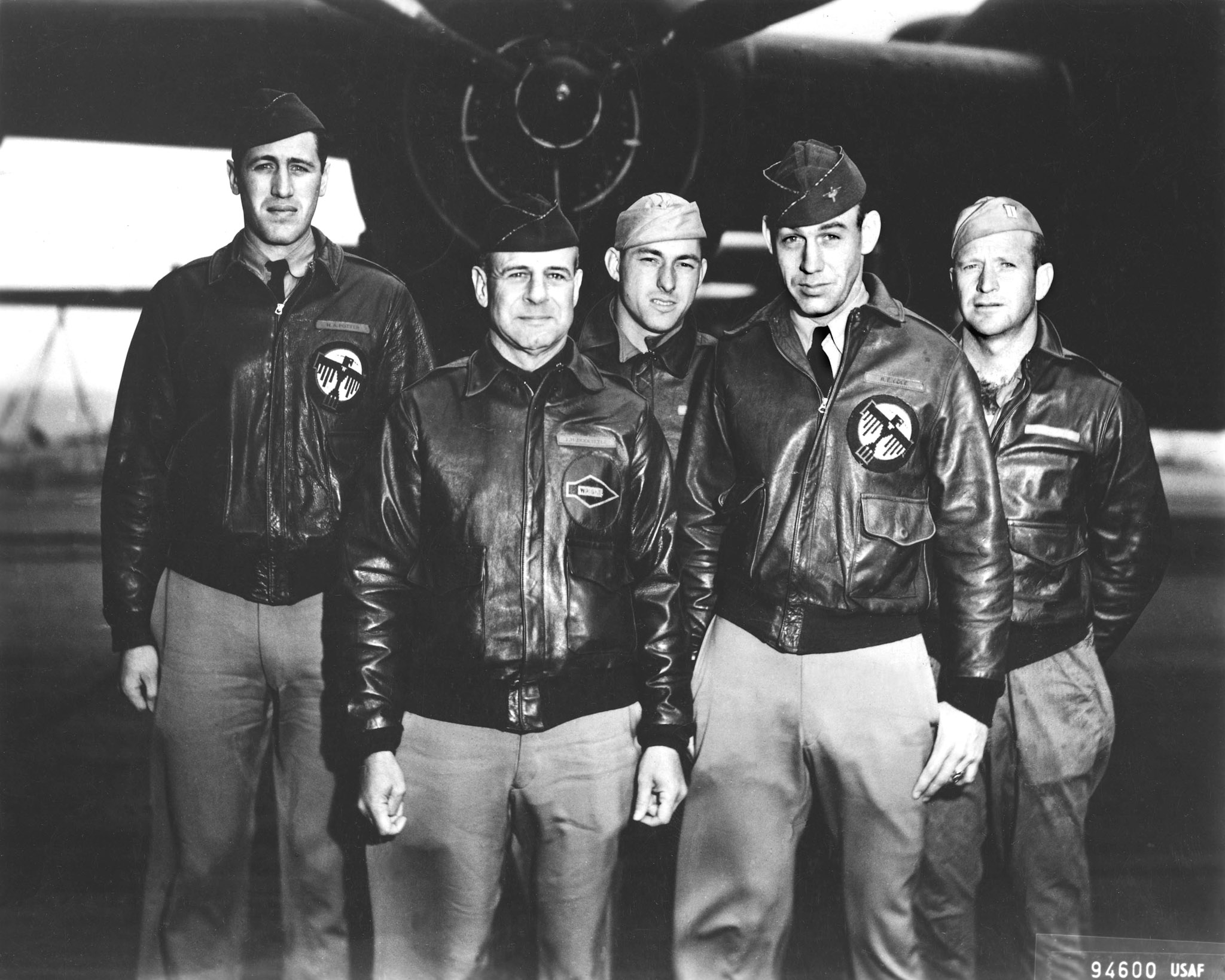
Five months after the Japanese attack on Pearl Harbor, the first American air operation targeting Japan was launched from the deck of the USS Hornet. The mission was named after Lt. Col. James (“Jimmy”) Doolittle who commanded the sixteen B-25B Mitchell medium bombers and their five-man crews.
The targets were Tokyo, Nagoya, Yokohama, and other sites on Honshu. This was a dangerous mission for many reasons including the lack of fighter escorts and the planes did not carry enough fuel to make it back to the aircraft carrier. The pilots were instructed to fly west to China after the bombing runs and land in China at designated airfields.
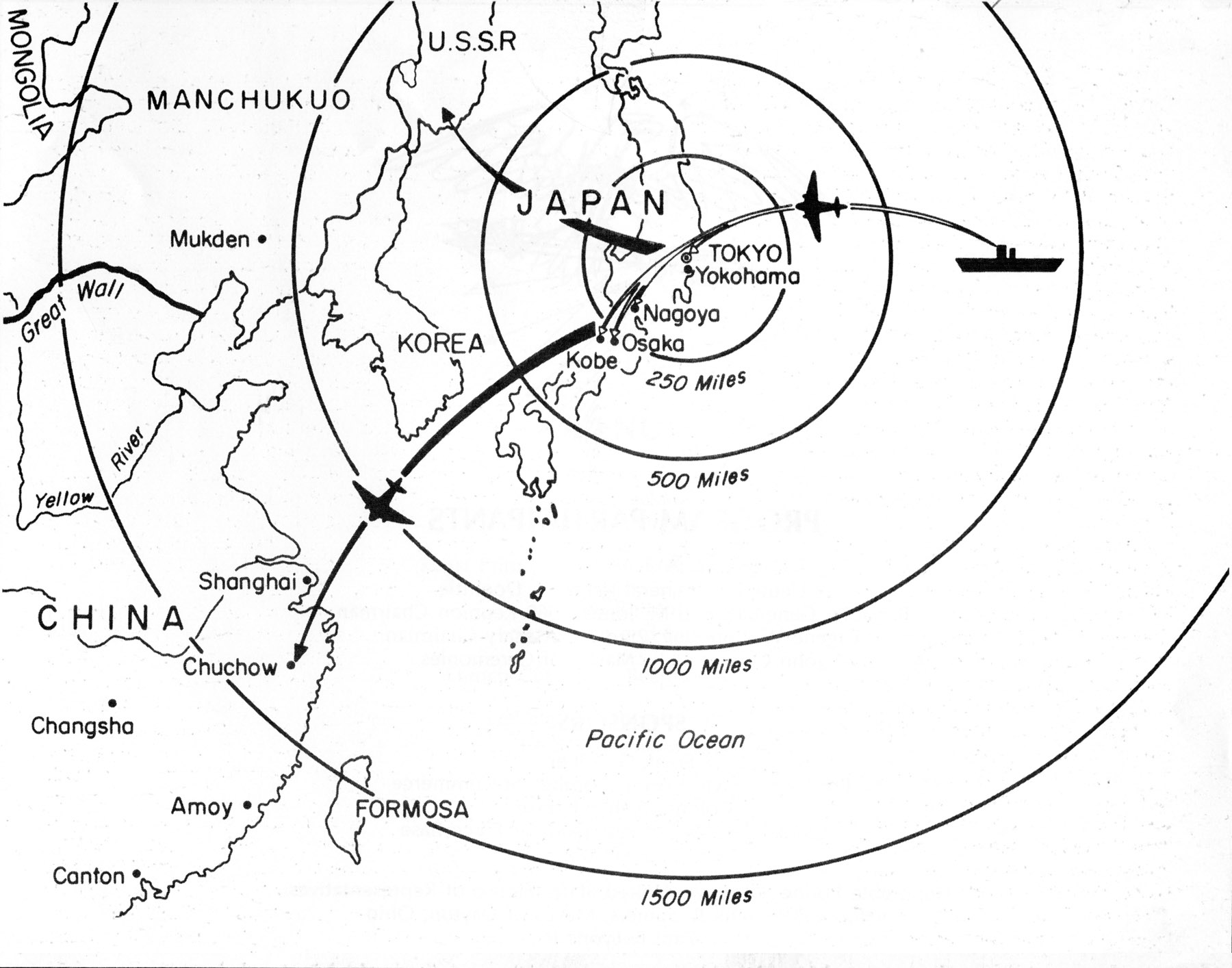
The mission was successful from the standpoint of bombing its targets. While damage was minimal, the Doolittle Raid resulted in a substantial boost to American morale. On the other hand, the Japanese began to worry their island was vulnerable, and the raid sowed the initial seeds of skepticism regarding the military leaders’ propaganda and their ability to defend the Japanese homeland.
The success of the raid also pushed the Japanese military leadership to seek revenge. It was left up to the architect of the Pearl Harbor attack, Admiral Isoroku Yamamoto (1884−1943), to plan the attack on Midway Island in early June 1942.
Probably the most severe consequence of the Doolittle Raid was felt by Chinese citizens in the Zhejiang and Jiangxi provinces (where most of Doolittle’s planes crashed). The Japanese and Chinese were historical enemies of one another. In the years leading up to World War II, the Japanese trained for combat using captured Chinese soldiers as bayonet dummies. In retaliation for the Doolittle Raid, the Imperial Japanese Army invaded the two provinces in May 1942 and for the next three and a half months, brutally slaughtered about 250,000 men, women, and children including those who helped shepherd the downed airmen to safety.
Of the sixteen B-25s and 80 crew members who took off 668 miles from
Tokyo, all but one of the planes crashed or ditched at sea. Seventy-one men survived the mission.
However, one plane did land safely. Plane #8 or 40-2242 piloted by Capt. Edward J. York (1912−1984) landed in the Soviet Union and to date, has never been seen. It is the missing plane that haunted Doolittle and led to an international search to find it in the early 1980s.
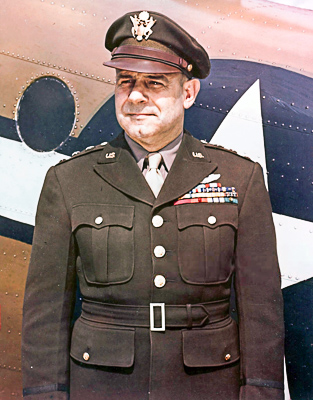
James (“Jimmy”) Doolittle
James Doolittle (1896−1993) earned the first doctorate in aeronautics from MIT in 1925, pioneered “blind flying” where a pilot relies solely on instruments, and performed the first aerobatic “outside loop,” maneuver that was considered at the time to be fatal. Doolittle was a flying instructor and reserve officer when he was called up to active duty during World War II. He served in the United States Army Air Force (USAAF), the successor to the Army Air Corp and predecessor to the US Air Force.
On 2 January 1942, Doolittle was promoted to lieutenant colonel and shortly afterward, volunteered to lead the retaliatory air raid on Japan. Lt. Col. Doolittle piloted Plane #1 or 40-2344. Flying toward China after the bomb run, his plane ran out of fuel and the crew bailed out safely. The plane crashed north of Quzhou, China. He and his men were guided to safety by Chinese guerrillas.
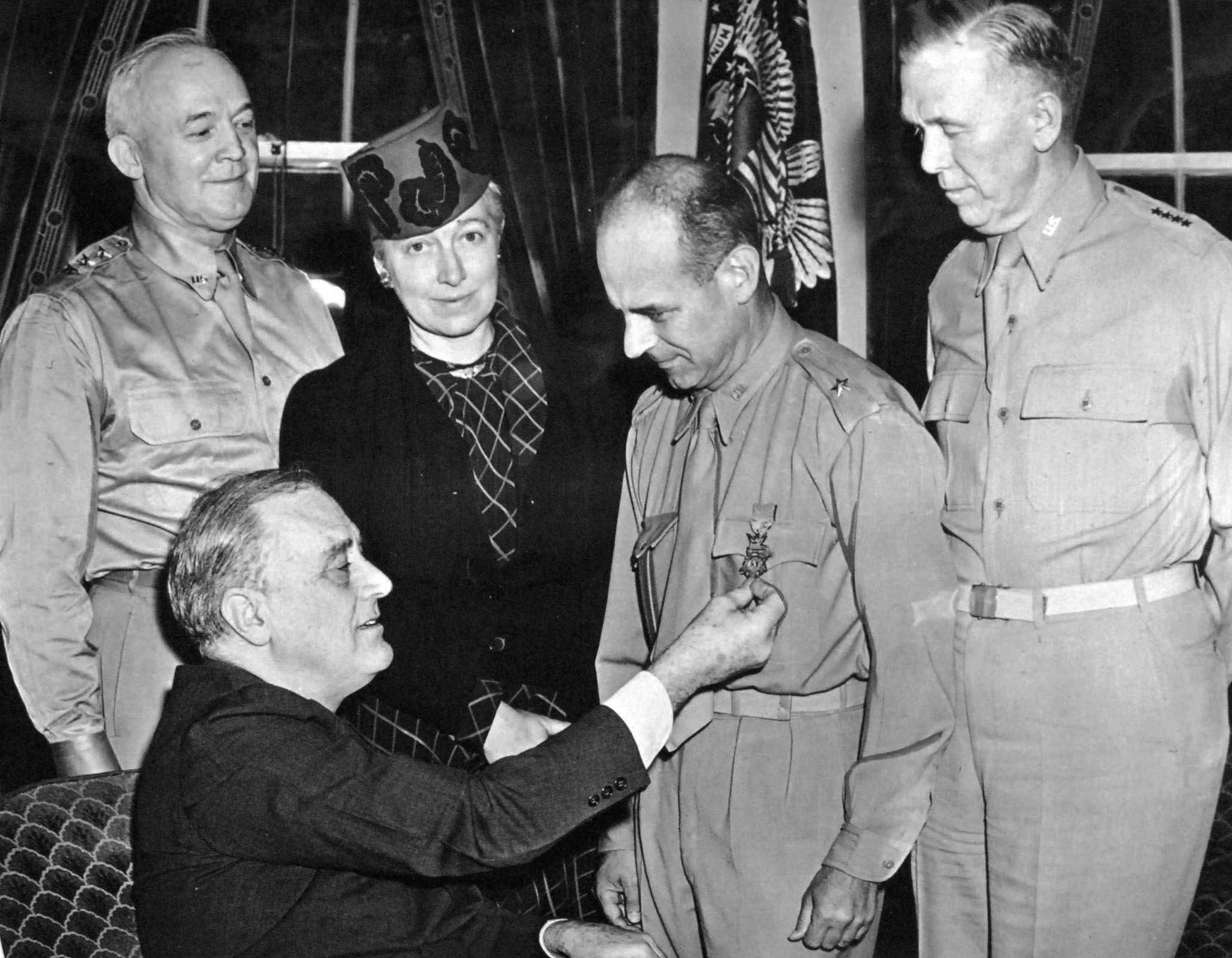
After learning all planes had been lost, Doolittle thought he was going to be court martialed. Hardly. President Roosevelt conferred the Medal of Honor on Lt. Col. Doolittle at the White House on 19 May 1942. Doolittle was also promoted to brigadier general, a two-step grade bump. Assigned to the Eighth Air Force or, ”Mighty Eighth” after the raid, he was due for reassignment but was rejected by Gen. Douglas MacArthur (1880-1964) for a command position in the South West Pacific Area. Instead, Gen. Doolittle took command of the Twelfth Air Force and until the end of the war, served in other major command positions in the USAAF.
Spotted By The Enemy
Takeoff from the Hornet was scheduled for 5:30 PM on 18 April 1942. However, the task force was spotted at 7:38 AM by a Japanese boat that radioed an attack warning to Tokyo. The boat was destroyed but Doolittle and the Hornet captain decided to launch the planes immediately. Doolittle and the other pilots had never taken off from an aircraft carrier. Despite this and the heavy fuel loads, all the planes took off safely (Doolittle’s plane came close to hitting the sea before recovering). Unfortunately, the early departure added an additional 168 miles to their journey.
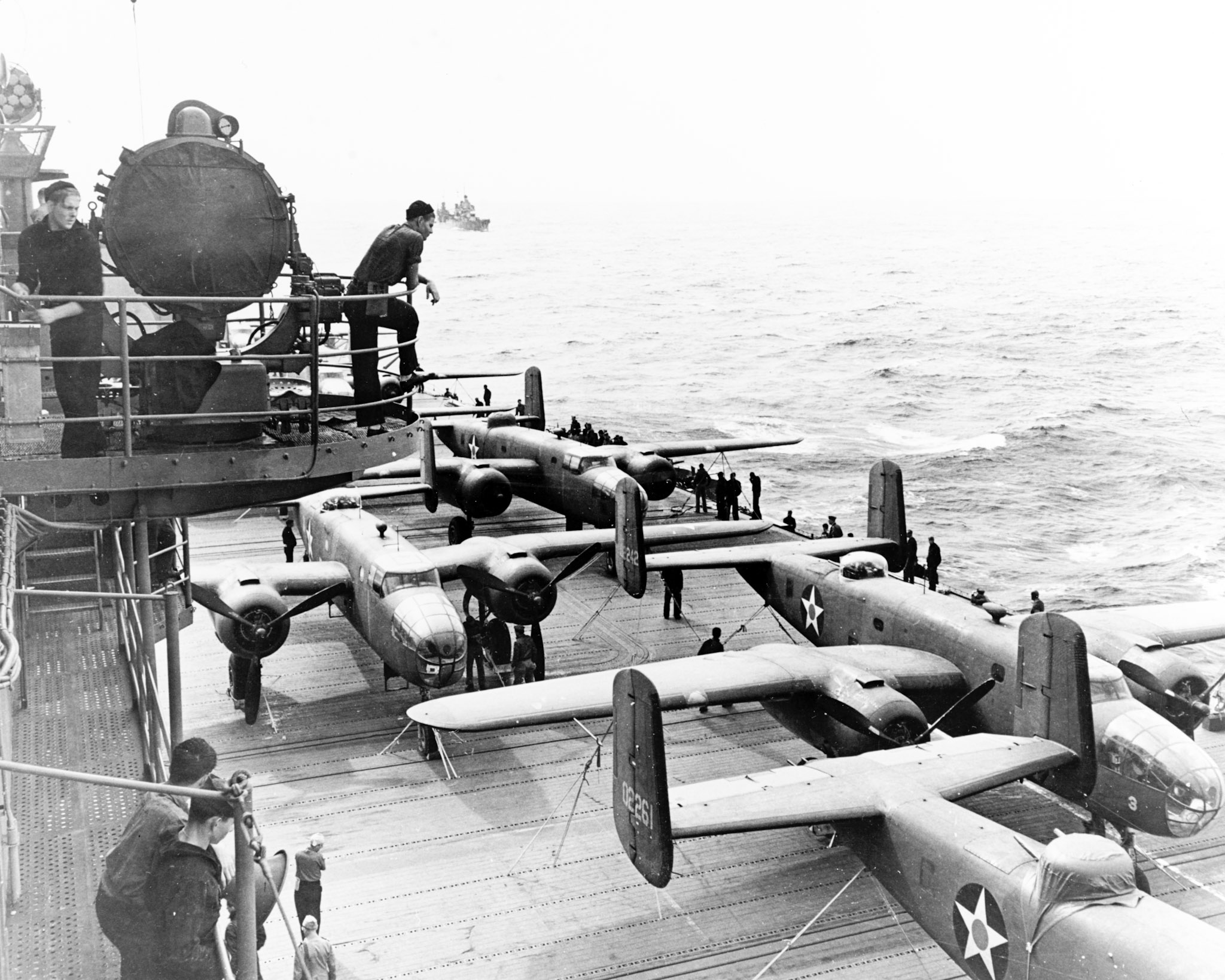


After six hours of flying time, the planes reached Tokyo at noon and opened the bay doors to unleash their payloads. Minimal damage was done to industrial and military targets with about fifty people killed.
On To China
After the bombing runs, fifteen planes headed toward China and safety. After flying for about thirteen hours, the pilots knew they wouldn’t make their intended Chinese bases. Four planes ditched at sea and eleven planes crashed after running out of fuel.
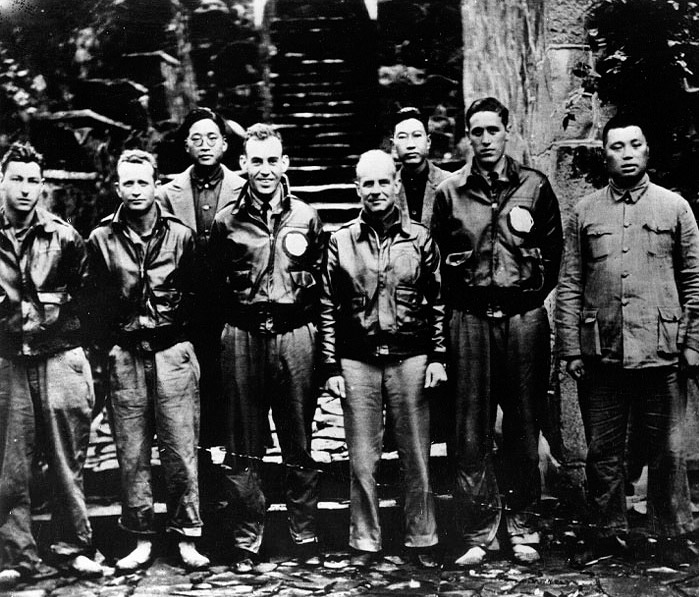
Seventy-seven of the 80 men who took off from the Hornet survived the initial mission. Three men died before reaching safety: Cpl. Leland Faktor (Crew Three) died after bailing out and two others, Sgt William Dieter and Cpl. Donald Fitzmaurice (both in Crew Six), drowned after ditching at sea.
Eight men were captured by the Japanese. All were put on trial, found guilty, and sentenced to death. Three men were executed: Lt. William Farrow and Sgt. Harold Spatz of Crew Sixteen and Lt. Dean Hallmark of Crew Six while the others were held in military confinement. One man, Lt. Robert Meder, died in prison and the others (Lt. Chase Nielsen, Lt. Robert Hite, Lt. George Barr and Cpl. Jacob DeShazer) were liberated by American troops in August 1945.
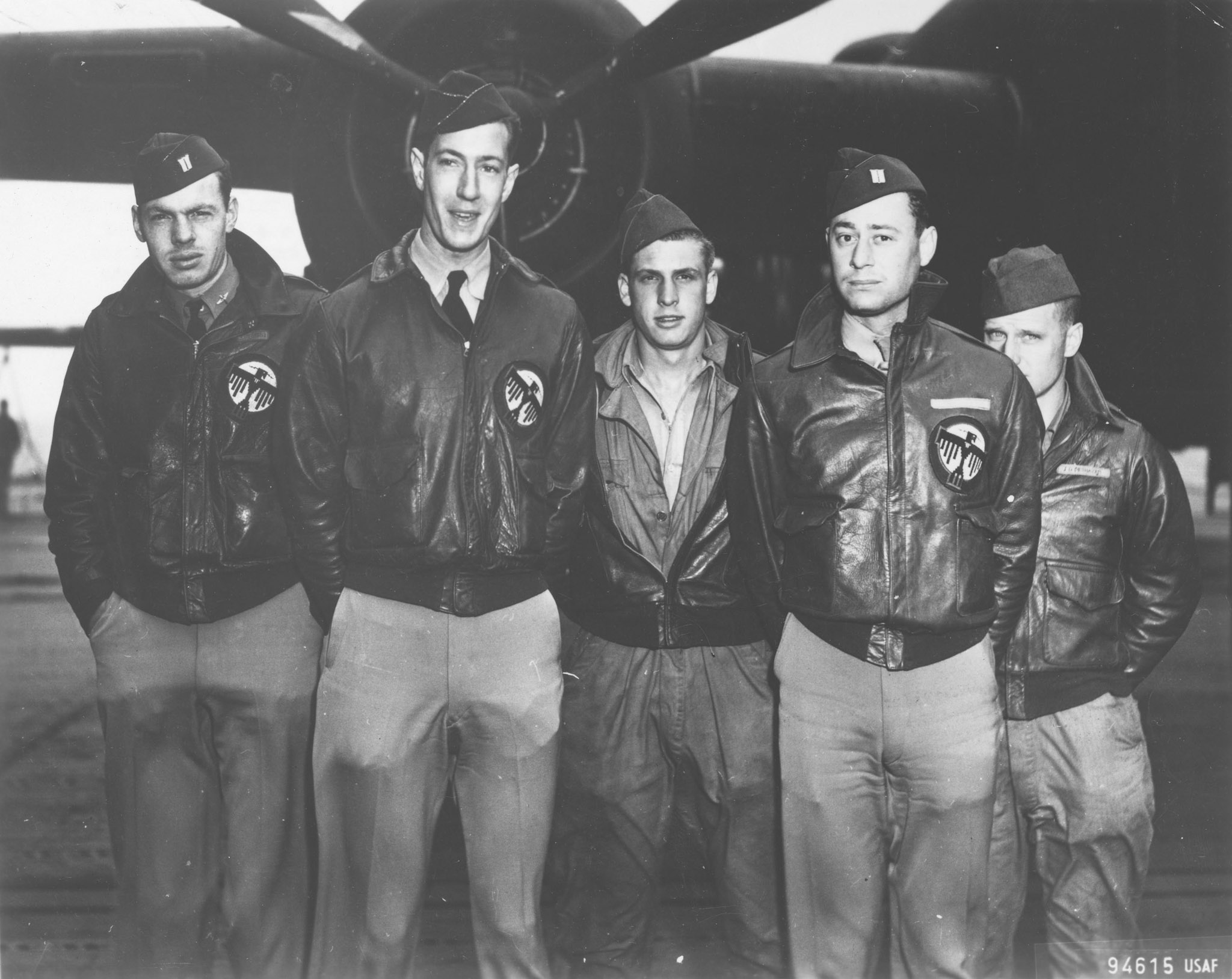

Capt. York’s plane was dangerously low on fuel, and he made the decision to land in the Soviet Union rather than ditching at sea.
The Missing Plane
Landing in the Soviet Union near Vladivostok, York and his crew were immediately interned. The Soviets had a neutrality pact with Japan and therefore had no choice but to take the Americans into custody. The plane was seized by the Russians. York and his crew were kept prisoners in various locations for more than one year until they were able to escape and return to safety. It is thought the Soviets allowed them to “escape.” It is believed the plane was used by the Russians to shuttle mail and military personnel during and after the war.
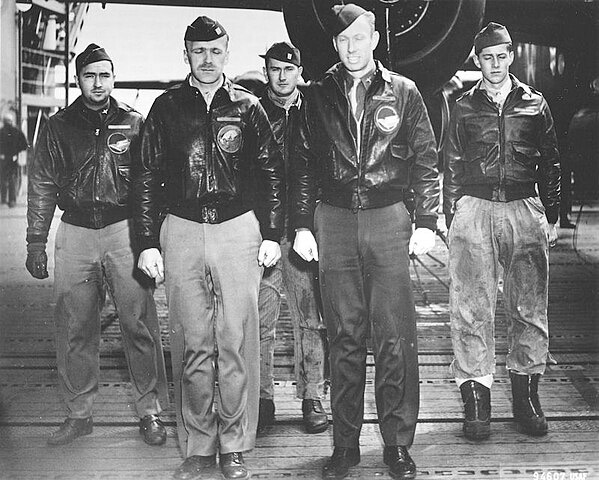
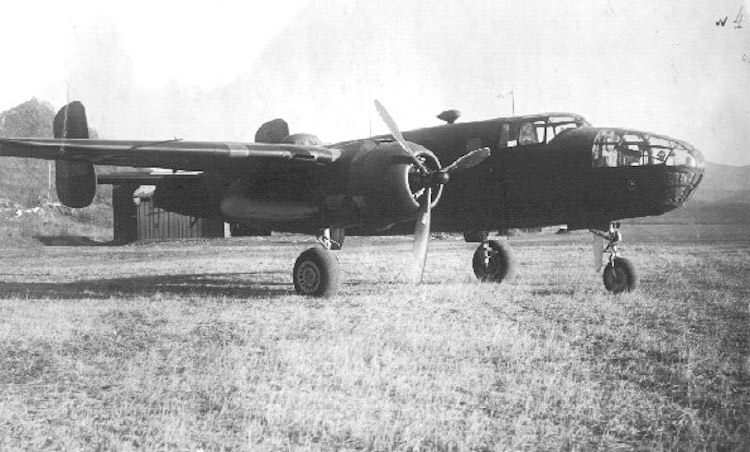
Despite attempts beginning in the 1980s to locate the missing Plane #8, it has never been found − even more than thirty years after the fall of the Soviet Union.
Next Blog: “The Eagle Squadrons”
Correspondence and Commentary Policy
We welcome everyone to contact us either directly or through the individual blogs. Sandy and I review every piece of correspondence before it is approved to be published on the blog site. Our policy is to accept and publish comments that do not project hate, political, religious stances, or an attempt to solicit business (yeah, believe it or not, we do get that kind of stuff). Like many bloggers, we receive quite a bit of what is considered “Spam.” Those e-mails are immediately rejected without discussion.
Our blogs are written to inform our readers about history. We want to ensure discussions are kept within the boundary of historical facts and context without personal bias or prejudice.
We average about one e-mail every two days from our readers. We appreciate all communication because in many cases, it has led to friendships around the world.
★ Read and Learn More About Today’s Topic ★
DiMella, Ashley J. Rare criminal confessions, British spy secrets from 115 years ago unveiled in new exhibit. Fox News, 4 April 2025. Click here to read the article.
Doolittle, James H. and Carroll V. Glines. I Could Never Be So Lucky Again: An Autobiography by General James H. “Jimmy” Doolittle. New York: Bantam Books, 1997.
Glines, Carroll V. Four Came Home: The Gripping Story of the Survivors of Jimmy Doolittle’s Two Lost Crews. Missoula: Pictorial Histories Publishing Co., 1995.
Glines, Carroll V. The Doolittle Raid: America’s Daring First Strike Against Japan. New York: Orion Books, 1988.
Note: Carroll V. Glines (1920−2016) is the acknowledged “historian” of the Doolittle Raid. He was honored as a “Doolittle Raider” by the surviving air crew. Watch this interesting video of an interview with Mr. Glines. Click here to watch the video.
Lawson, Ted W. Thirty Seconds Over Tokyo. New York: Pocket Star Books, 2004. (Original edition published by Random House, 1943.)
Paradis, Michel. Last Mission to Tokyo: The Extraordinary Story of the Doolittle Raiders and Their Final Fight for Justice. New York: Simon & Schuster, 2020. Click here to watch the video.
Scott, James M. Target Tokyo: Jimmy Doolittle and the Raid That Avenged Pearl Harbor. New York: W.W. Norton, 2016.
Zimbalist, Samuel (producer). Thirty Seconds Over Tokyo. Metro-Goldwyn-Mayer, 1944.
Disclaimer:
There may be a chance that after we publish this particular blog, the video links associated with the blog are no longer accessible. We have no control over this. Many times, whoever posts the video has done so without the consent of the video’s owner. In some cases, it is likely that the content is deemed unsuitable by YouTube. We apologize if you have tried to access the link and you don’t get the expected results. Same goes for internet links.
What’s New With Sandy and Stew?
Sandy and I have settled into our new residence in a small town just south of Nashville. It’s been twenty years since we left Southern California and moved to Nashville (relocation with Mars Petcare) and nine years after leaving Nashville to move south to Florida (aging parent issues). We’re glad to be back in Tennessee and the Nashville area. It’s a very vibrant area but even in the short time we were gone, the area has changed considerably. We are sitting here on the back end of a major winter storm that has kept us house bound for four days. (I suppose it could be worse . . . we did it for two years with Covid.) We are looking forward to resuming the blogs, communicating with our friends around the world, and getting the next volume of the occupation book published.
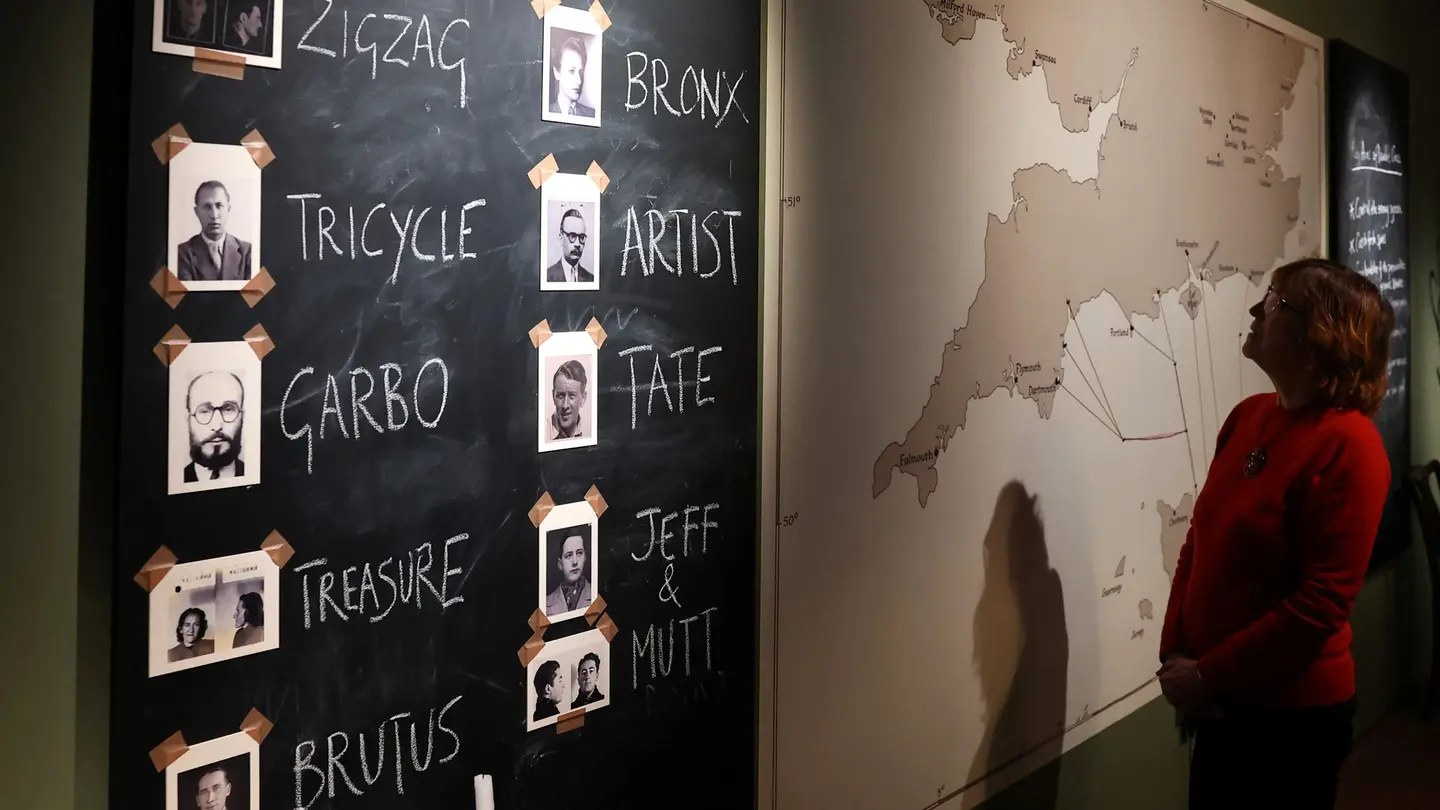
Aside from all of this, I ran across an interesting article the other day (see above in the recommended reading section; Ashley J. DiMella) about a new London exhibit called “MI5: Official Secrets.” It’s about MI5 and the U.K.’s domestic counterintelligence and security agency. There was a photo that caught my eye because of the images of spies and their British code names from World War II. For those of you who read our 2018 blog, The Double Cross System (click here to read the blog), you will be quite familiar with the faces and code names of these double agents.
Thank you to all of you who subscribe to our bi-weekly blogs. It seems there isn’t a day that goes by where we don’t increase our readership. Please let your history buff friends and family members know about our blog site and blogs.
Someone Is Commenting On Our Blogs
Shelly Sanders was kind enough to contact us regarding our blog on the women who were Soviet snipers (Lady Death–click here to read the blog). Shelly is a well-known author and has recently published her new book, The Night Sparrow. It is historical fiction based on the female Soviet snipers. I suggested to Shelly that she read our blog, Night Witches (click here to read the blog), and see if there might be interest in the female Soviet pilots who bombed German troops. Anyway, thanks Shelly for reaching out to us. Good luck with the new book!
If there is a topic you’d like to see a blog written about, please don’t hesitate to contact me. I love hearing from you so keep those comments coming.
Share This:
Follow Stew:







Find Stew’s books on Amazon and Apple Books.
Please contact Stew directly for purchase of books, Kindle available on Amazon. Stewross55@gmail.com or Contact Stew on the Home Page.
Please note that we do not and will not take compensation from individuals or companies mentioned or promoted in the blogs.
 Walks Through History
Copyright © 2026 Stew Ross