Five years ago, I wrote a blog by the same name. It was back in the days when I purposely limited my blogs to no more than five or six hundred words (my Millennial friends told me this was the “norm”). I’ve re-read some of those blogs and frankly, I’m embarrassed. First, my writing style has evolved (and hopefully, improved). Second, I could have added so much more interesting information had I not listened to my friends. Another difference between then and now is the number of images we used. Our blogs today use as many images as I can find that add value to the story. In the past, one or two images made it into the story. I guess this is what you call progress. So, I’ve decided to re-write some of the more popular blogs and expand both the story as well as images. I hope you enjoy this one (again).
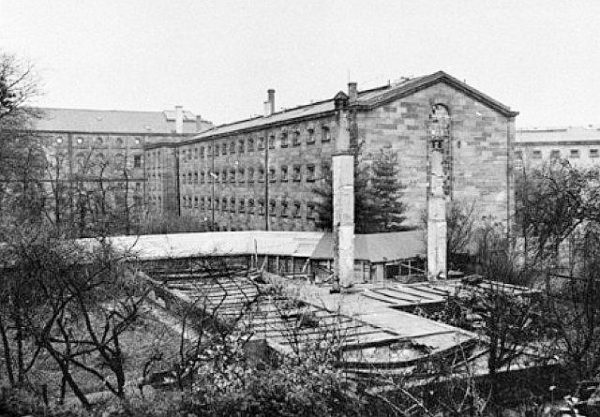
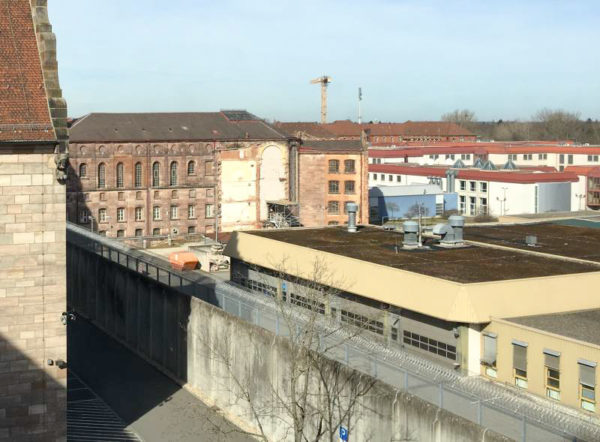
Exterior view of Nuremberg prison and the wing that housed Nazi war criminals during the Nuremberg trial. Note the covered walkway (white) leading from the prison wing to the Palace of Justice and courtroom. Prisoners walked through the covered path to and from the daily court proceedings. This wing was destroyed. Photo by anonymous (c. 1946).The former prison wing that housed the Nuremberg defendants was destroyed and only white plaster is a reminder of the wing in a preserved part of the central prison building. Photo by anonymous (date unknown).
I’ll bet most of you have never heard of National History Day. No, it’s not the same as the Congressional proclamations for National Donut Day, National Bobblehead Day, or even National Fruitcake Toss Day (these all fall in January so make sure you mark your calendars for next year).
National History Day (NHD) is a non-profit organization dedicated to offering year-long academic programs for middle- and high-school students (6th to 12th graders). The largest NHD program is the National History Day Contest which encourages students to conduct historical research, interpretation, and creative expression on a topic of their choice. Each year, a theme is chosen, and the students pick their topic based on the theme, which is then presented as either a paper, exhibit, performance, documentary, or website. Think of this like the Science Fair projects but only on history (I received an “Honorable Mention” on mine). The student will enter their project at the local and affiliate levels, with the top projects advancing to the National Contest. NHD teaches critical thinking, writing, and research skills and boosts the students’ performance across all subjects. Past winners include Guy Fieri, Food Network’s television personality.
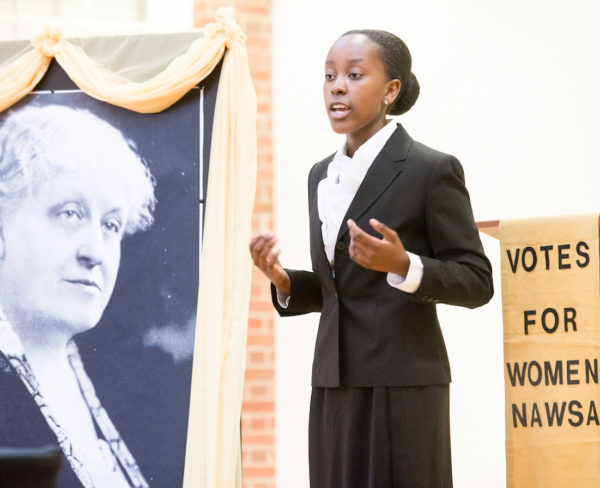
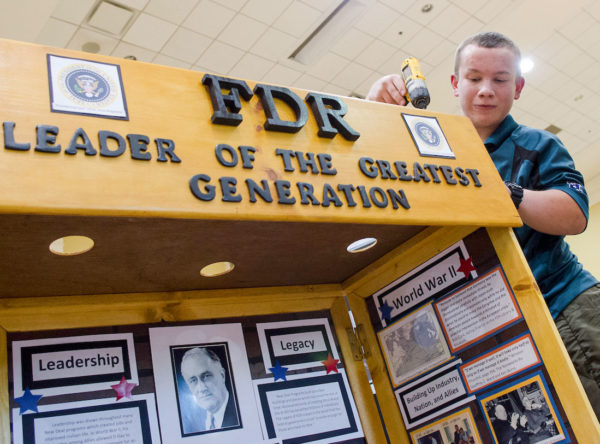
Young contestant in the National History Day Contest. Photo by anonymous (date unknown). National History Day: www.nhd.orgYoung contestant working on his exhibit for the NHD Contest. Photo by anonymous (date unknown). National History Day: www.nhd.orgGuy Fieri, Food Network personality. Photo by anonymous (date unknown). Courtesy of the Food Network.
Did You Know?
Did you know that the greatest compliment I have been given in regard to writing the walking tour books was from one of my members in the Southeast Business Forums which I founded and ran in Nashville?
This gentleman had a daughter in high school who hated history. She refused to open or read any book having to do with history (you can imagine what that did to her GPA). He bought one of my French Revolution books, handed it to her, and said, “Just flip through this.”
He told me that she sat down with the book and read it from cover to cover in one sitting. When his daughter was finished, she came to him and requested that he buy the other books for her to read. The end result, or so he told me, was that his daughter developed a love for history, started bringing home A’s in her history class, and was considering becoming a history major in college.
That’s what keeps me going.
The theme for the 2019-2020 National History Day Contest is “Breaking Barriers in History.”
So, how do I know about NHD, its current theme, and the fact that some television celebrity who likes hot food is a past winner? I received an e-mail from Tristan H. asking me if I would agree to be interviewed in conjunction with the project she is working on for the 2020 National History Day Contest. Tristan informed me that her project was going to highlight the exploits of the female spies in the Special Operations Executive (SOE) during World War II. Tristan is in the 7th-grade in Southern California and frankly, after receiving four or five e-mails from her, I don’t think I’ve ever run across a 7th-grader who writes as well as Tristan.
I suggested she put together a list of questions and e-mail them to me. I would respond and then, if she wanted to follow-up with a discussion over the phone, I would make myself available.
The purpose of this blog is to make you all aware of the NHD as well as share Tristan’s questions (and my answers) with you.
Tristan’s Questions
How did the women acting as spies break gender barriers at the time?
Probably the biggest barrier they broke was by being assigned to what I would consider the “front-line.” Although their assignments were non-combat related (i.e., typically as radio operators), if they were caught, the penalty would certainly have been terrible torture (Odette Sansom is a good example) and in many cases, execution at the hands of the Gestapo, SS, or the Milice (e.g., Violette Szabo). However, some women did participate in actual combat against the Germans (read Nancy Wake’s story, The White Mouse here). All qualified SOE agents, men and women, were trained in hand-to-hand combat as well as how to handle weapons and sabotage materials. So, this tells me that women agents were expected to be ready for combat if it came their way (Women Agents of the SOE, read here). Read More “National History Day: Breaking Barriers in History”
Lavishly illustrated, gripping guide to the Paris that existed under Nazi rule.
This is a fantastic new book that provides extensive information for both those planning a trip and for armchair historians. While there are are walks that take you past famous places made infamous by Nazi rule, there is also a lot of detailed information. Stew Ross provides details about many topics that are not necessarily popular, including anti-semitism and collaboration. Photos add poignancy. Paris is haunted by its past, and these pages show you exactly why. The days of the Occupation and the Resistance are not that distant.
Jane Gabin, Amazon customer
“Another outstanding, well-researched, and presented book by Stew Ross. It gives a detailed guided walking tour full of facts about the activities of the Gestapo during their occupation of Paris during World War II. I highly recommend this book to everyone who has an interest in what life was like during the Nazi occupation in France.”
Richard H.F. Neave, President Royal British Legion Paris branch, member Paris-based Libre Résistance SOE “F” Section and author of SOE: A Life in the Shadows