
Posted on

Diplomatic Lessons and Warning Signs,

Fifteen years after the end of World War II, William L. Shirer published his epic book, The Rise and Fall of the Third Reich. I purchased the book almost forty years ago through the “Book of the Month Club”⏤remember that organization? (Believe it or not, BOMC still exists.) I just finished reading it and there were many topics from ninety-years ago that pertain to today’s world. Today’s blog captures one of those subjects.
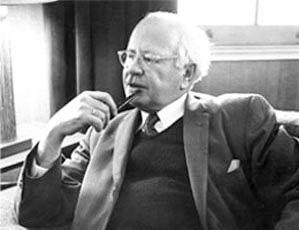
American author and journalist, William L. Shirer. Photo by anonymous (c. 1961). PD-U.S. Government. Wikimedia Commons.

William L. Shirer (1904−1993) was an American journalist and war correspondent. He was an eyewitness to the rise of Adolf Hitler and Nazism during the 1930s. He started as a print journalist and worked for Universal Service until 1937 when he was fired from the William Randolph Hearst news company. Edward R. Murrow, European manager for CBS, immediately hired Shirer to open a bureau on the European continent. (Murrow worked out of the London office and wanted a correspondent located in Europe.) Shirer’s office was in Vienna but most of his reporting was done onsite from Paris, Berlin, and Rome. After Dunkirk, he personally followed behind the movement of German troops to report on the war. As the Nazis continued to pressure him in 1940 to report inaccurate information, Shirer suggested to Murrow that his tenure in Nazi territory was about over. Right about the same time, Shirer learned the Gestapo was developing a case against him for espionage which carried the death penalty. In December 1940, Shirer left Germany and did not return to Europe until 1945 when he covered the Nuremberg trials. Read More Diplomatic Lessons and Warning Signs,
Posted on

Heavy Water

Toward the end of World War II, Hitler and his generals were anxiously waiting for the “miracle weapons” to turn the tide of war in their favor. There were two new weapons that the Nazis had developed which ultimately proved ineffective: a jet fighter and the electro-U-boat. How close did they come to using them against the enemy? More than one thousand jet planes, the Messerschmitt Me 262, were produced and put into action by mid-1944. The Allied fighter planes were no match for the Me 262 in the air. However, very few of the jets ever left the ground. German oil refineries were destroyed thereby limiting the availability of jet fuel. Second, runways had to be extended to accommodate the jets. When they saw the altered runways, Allied bomber and attack plane pilots knew the jets were parked nearby and went out of their way to target them. So, most of the Me 262s were destroyed on the ground and the jets never had any significant impact on the course of the war. Grand Admiral Karl Dönitz (1891−1980) promised Hitler that 126 new electro-U-boats would be put out to sea to once again wreak havoc on British/American shipping lanes. Only two were ever launched and like the jet, never lived up to expectations.

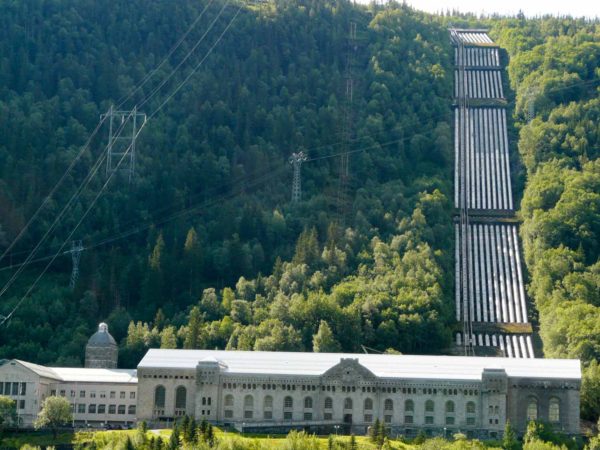
Hydroelectric plant where heavy water was manufactured and stored underground. The building was demolished in 1971. Photo by anonymous (date unknown). Gausta Telemark Norway. www.gausta.com.
Site of the former hydroelectric plant where heavy water was manufactured underground. The building which stood in front of the plant facility, was demolished in 1971. Photo by anonymous (date unknown). Gausta Telemark Norway. www.gausta.com.

The third “miracle weapon” and the one that worried Roosevelt and Churchill the most was the development of the German atomic bomb. After Frédéric and Irène Joliot-Curie wrote that atomic fission was possible and could be used to develop a powerful weapon, Hitler decided to begin his atomic weapons program in 1939. It needed two very important components to be successful: uranium and heavy water. The problem for the Nazis turned out to be heavy water was very scarce and hard to produce. That problem was soon solved after Germany invaded Norway on 9 April 1940. The Vemork Norsk Hydro plant near Rjukan, Norway was capable of producing heavy water. Read More Heavy Water