Posted on

The Eagle Squadrons

I think most of us are familiar with some of the aerial fighter squadrons from both world wars. The Flying Tigers, the Tuskegee Airmen (The Red Tails–click here to read the blog), and the U.S. Navy “Jolly Rogers” were several of the well-known squadrons during World War II. The Lafayette Escadrille and 94th Aero Squadron (“Hat in the Ring”) were two of the most famous World War I airplane squadrons.

The concept of foreign volunteers (i.e., mercenaries) joining to fight combatant nations is nothing new. The German Hessians joined the British to fight American revolutionaries, the Swiss Guards protected the Pope in Vatican City as well as French monarchs in Paris while the Nepalese Gurkhas once fought against the British but later fought alongside British soldiers.

Today, you will be introduced to a famous fighter squadron but not as well-known as the ones I have mentioned. The Eagle Squadrons were made up of American pilots who volunteered to join the British Royal Air Force (RAF) before the United States entered the war following Japan’s attack on Pearl Harbor (7 December 1941).

Click here to watch the video Americans Flying for Britain.


“If you thought that science was certain well, that is just an error on your part.”

     ⏤ Dr. Richard Feynman

Theoretical physicist

Dr. Feynman also said, “Science is the belief in the ignorance of experts” because he knew that skepticism and a willingness to assimilate new evidence propel the scientific endeavor.


We are watching what seems to be a possible global rearrangement and at the very least, a new way of dealing with both our allies and not-so-friendly nations. Is this a temporary template for conducting foreign policy or are we seeing the beginnings of a permanent change?

We should revisit a quotation from Gen. Charles de Gaulle:

“No nation has friends, only interests”

It is always fun to read the many quotations from Winston Churchill who is also quoted quite often. It is too bad we are not exposed to more of Gen. de Gaulle’s quotes. Like Churchill, the French general had very insightful comments that are accurate and stand the test of time.


Did You Know?

Did you know that the first item sold on eBay was a broken laser pointer? A Silicon developer, Pierre Omidyar, invented eBay in 1995 (then called “Auction Web”) and tested his new online venture by loading an ad for his broken pointer that originally cost him US$30. He listed the laser pointer for $1.00 and after one week, bidding began with the final winning bid at $14.83.

Within two years, the site was re-branded as eBay and its millionth item was sold. So, who purchased the laser pointer? A Canadian, Mark Fraser, identified himself in 2015 as the person who became the first customer of eBay and has held on to the pointer for all these decades.

Mark Fraser holding the broken pointer he purchased from eBay. Photo by anonymous (c. September 2015). Rupley, Sebastian, eBay News Team, 11 September 2015. “Meet the Buyer of the Broken Laser Pointer.”
https://www.ebayinc.com/stories/news/meet-the-buyer-of-the-broken-laser-pointer/

I wonder what the pointer would fetch today if Mr. Fraser were to put it on eBay.


The Origin of the Eagle Squadrons

Prior to the United States entering World War II, a successful American businessman and socialite (and friend of Ernest Hemmingway), Charles Francis Sweeny (1909−1993), persuaded the British government to form a squadron comprised solely of American pilot volunteers. Sweeny and his wealthy friends not only raised the money to send the volunteers to England for training, but they also personally recruited the men.

Prior to the occupation of France in June 1940, Sweeny’s activities were considered illegal. He managed to thwart the FBI’s efforts to capture and imprison the “recruiters.” However, after France fell to Hitler, the United States government turned its head on his activities and even the FBI declared Sweeny’s recruiting efforts were legal.

Meanwhile, at the same time, there were parallel efforts being made in Canada. Several World War I aces, William (“Billy”) Bishop (1894−1956) and Clayton Knight (1891−1969), began to recruit and train Americans for service in the RAF. By the end of 1941, they had recruited more than 7,000 Americans with about 15% of them becoming pilots. (Sweeny’s uncle was recruiting Americans to fly for the French air force.)

Billy Bishop standing next to his Nieuport 23 airplane during World War I.
Billy Bishop standing next to his Nieuport 23 airplane during World War I. Photo by anonymous (c. 1918). PD-No known copyright restrictions. Wikimedia Commons.

The British government decided to accept the American volunteer pilots in July 1940. By then, the Battle of Britain had begun, and Britain was fighting for its life. The American pilots were desperately needed.

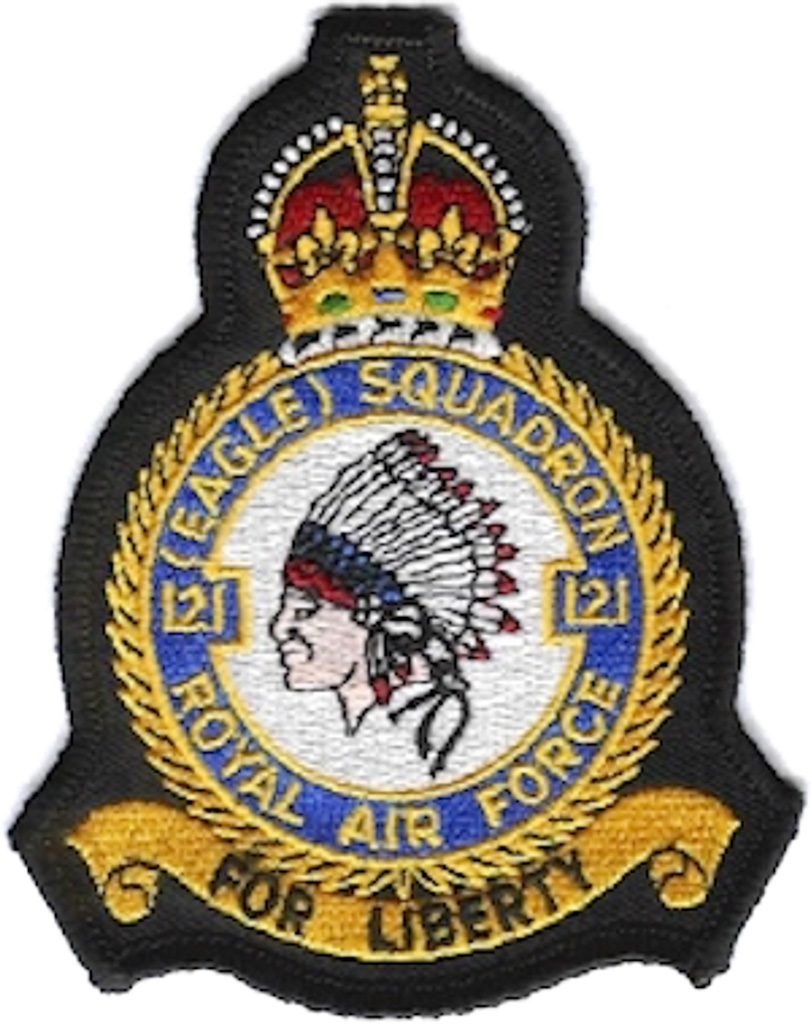
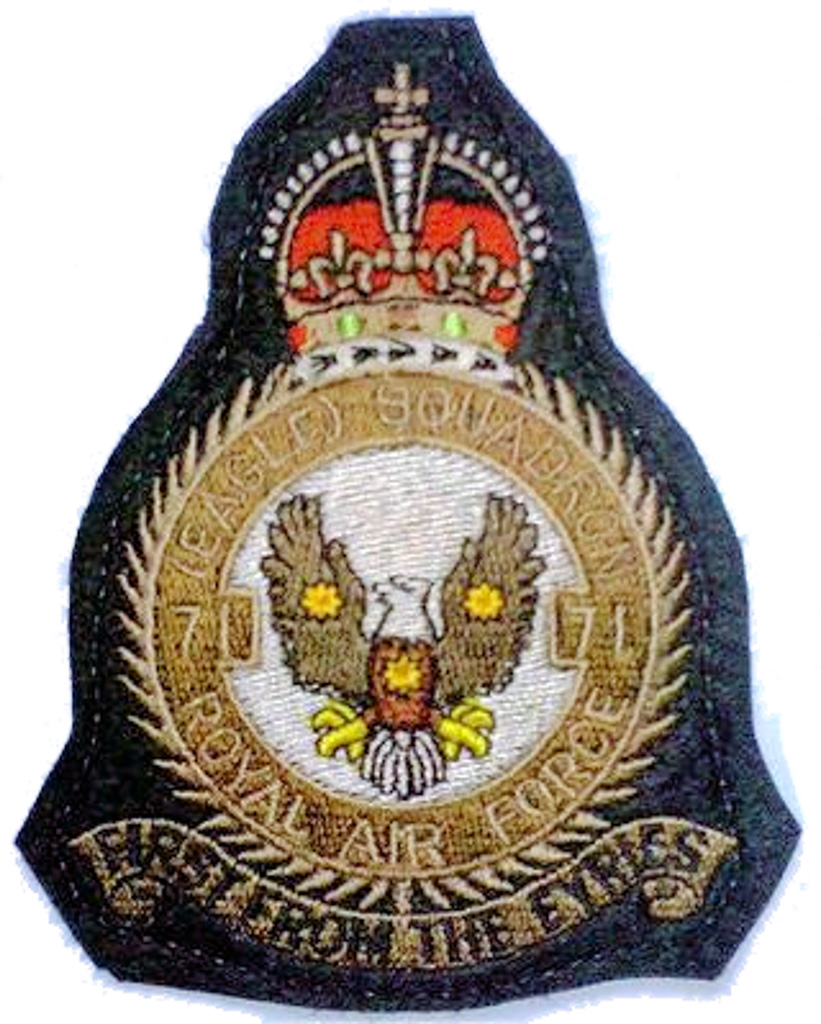
The first unit formed was the No. 71 Squadron known as “The Eagle Squadron.” Sweeny designed the shoulder patch bearing an American eagle. There were enough volunteers to form two additional units: the No. 121 and No. 133 Eagle Squadrons. The pilots began flying missions over France, escorting bombers, and performing targeted strikes.

The emblem of the Eagle Squadrons. Photo by anonymous. Patch design by Charles Francis Sweeny (date unknown). PD-Creative Commons CC0 1.0 Universal Public Domain Dedication. Wikimedia Commons.
No. 71 Eagle Squadron RAF badge.
No. 71 Eagle Squadron RAF badge. Photo by anonymous (c. 1940). PD-U.K. Government public domain. Wikimedia Commons.
No. 121 Eagle Squadron RAF badge.
No. 121 Eagle Squadron RAF badge. Photo by anonymous (c. 1940). PD-U.K. Government public domain. Wikimedia Commons.
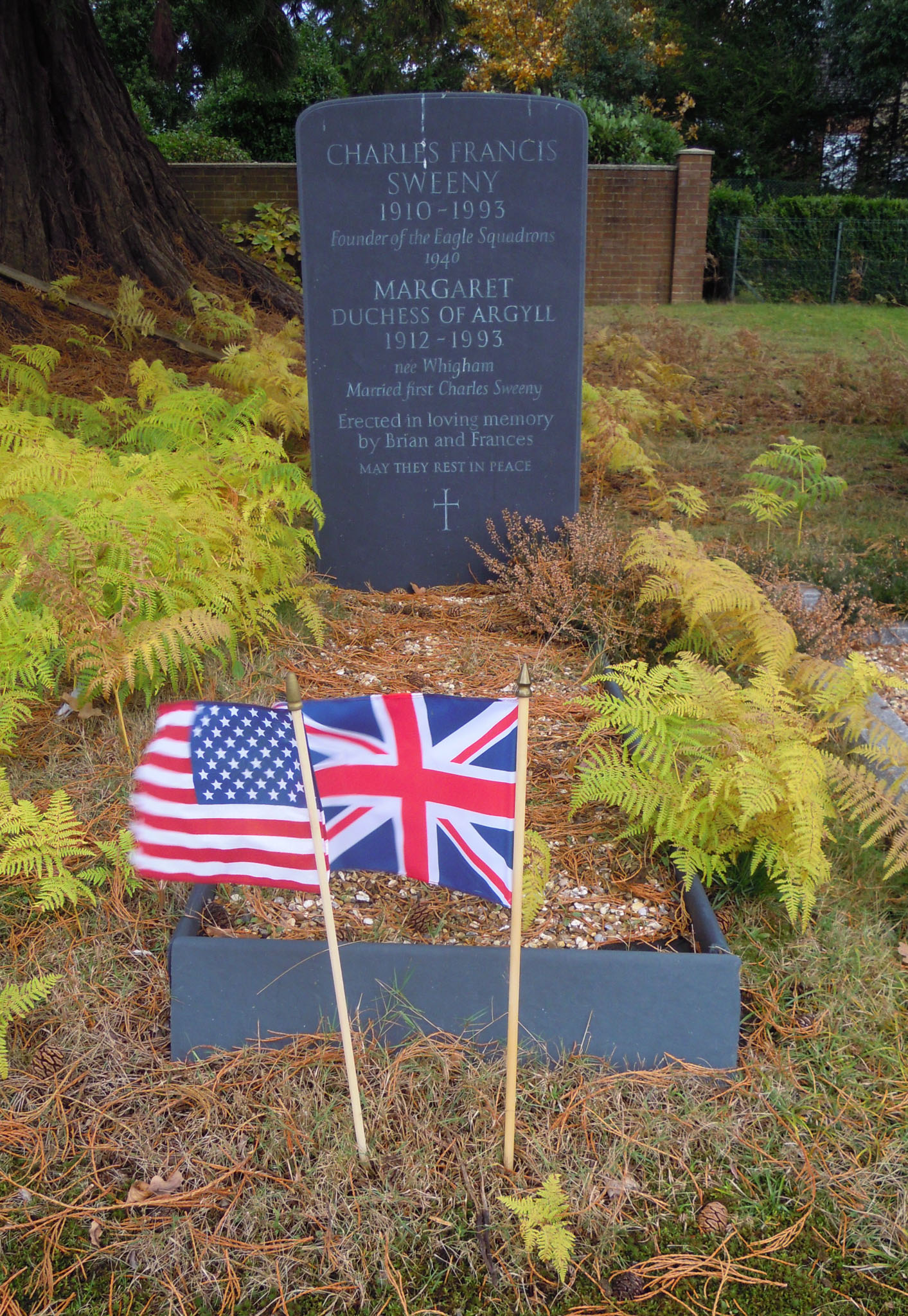
Grave site of Charles Francis Sweeny and his first wife. Photo by Jack1956 (17 November 2016). PD-Creative Commons CC0 1.0 Universal Public Domain Dedication. Wikimedia Commons.

The Eagle Squadrons

The requirements to join the Eagle Squadrons were a high school diploma, being of age 20 to 31 years, a vision of 20/40 correctable to 20/20, and 300 hours of certified flying time. It was actually easier to join the RAF than it was to get into the United States Army Air Corps (the predecessor of the United States Army Air Force, or “USAAF” formed in June 1941).

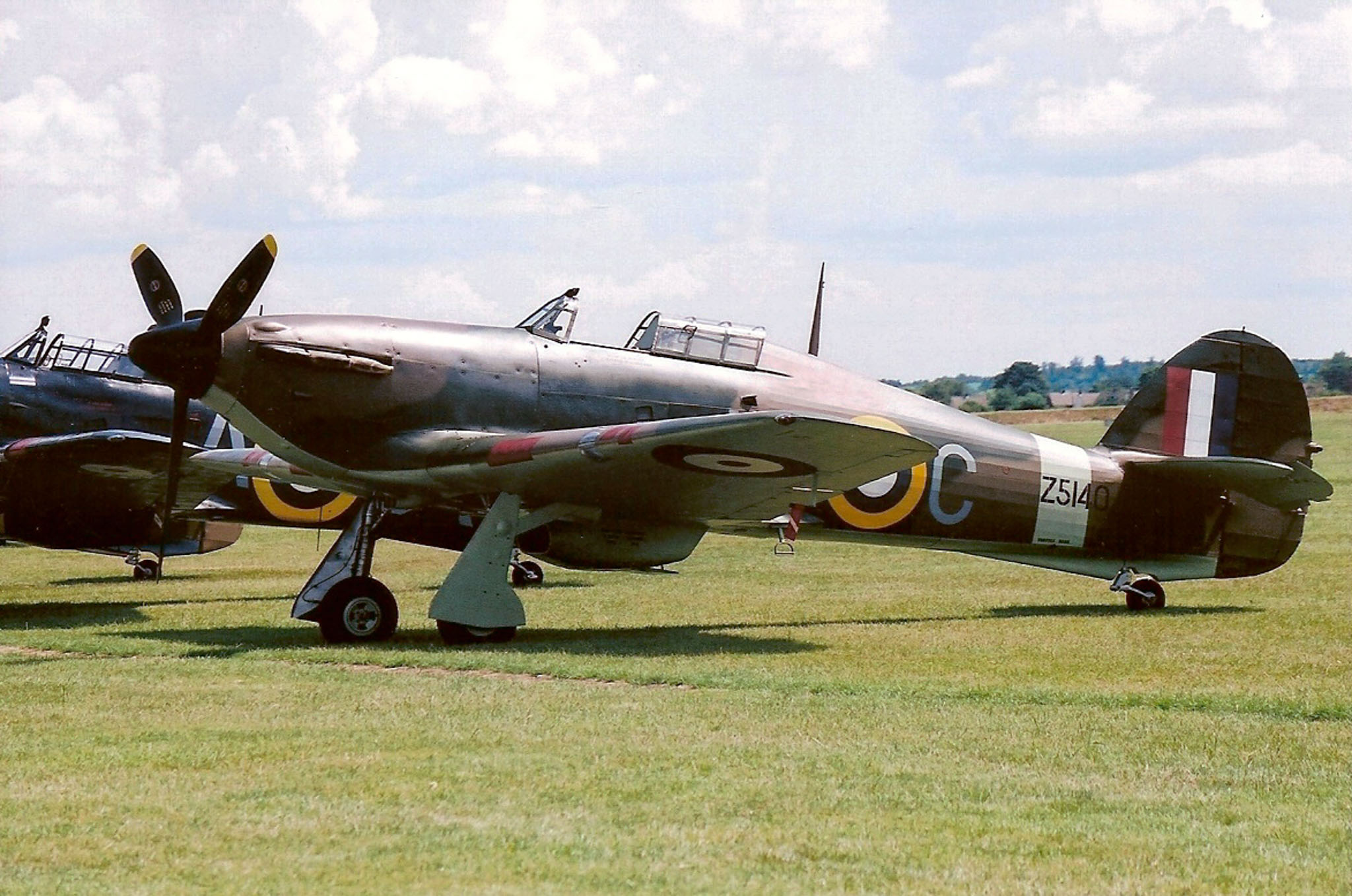
Training took place in England using Miles Master Trainers, Hawker Hurricanes, and Supermarine Spitfires. Upon graduation, the men were commissioned as RAF officers and assigned to various RAF fighter squadrons. The volunteers never renounced their American citizenship. Their RAF uniforms were modified to include the Eagle Squadron patch and the letters “ES” for Eagle Squadron.
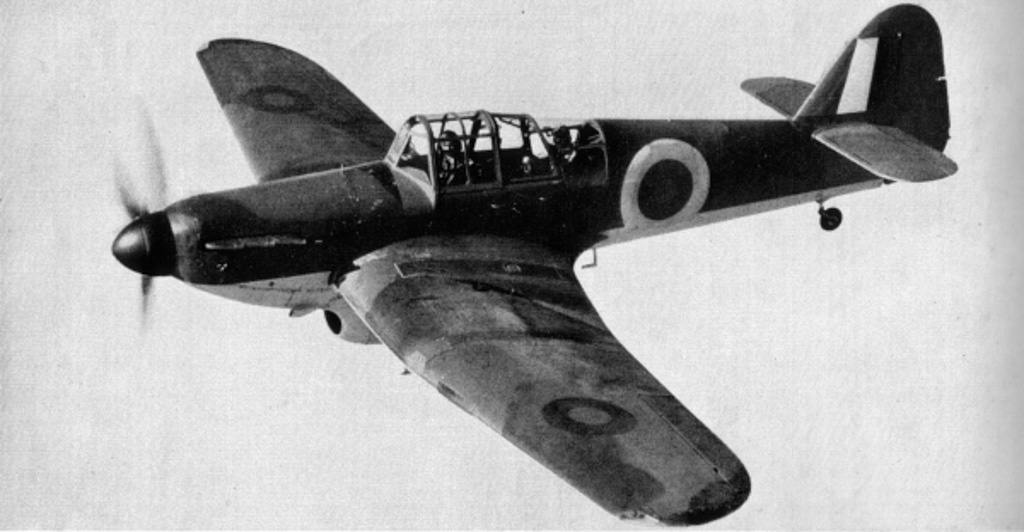
Miles M.9A Master advanced trainer.
Miles M.9A Master advanced trainer. Photo by anonymous. Prepared for Wikipedia by Keith Edkins (c. 1935-1940). PD-U.K. public domain. Wikimedia Commons.
Hawker Hurricane Mk.IIB.
Hawker Hurricane Mk.IIB. Photo by anonymous (date unknown). PD-GNU Free Documentation License, Version 1.2 or later. Wikimedia Commons.
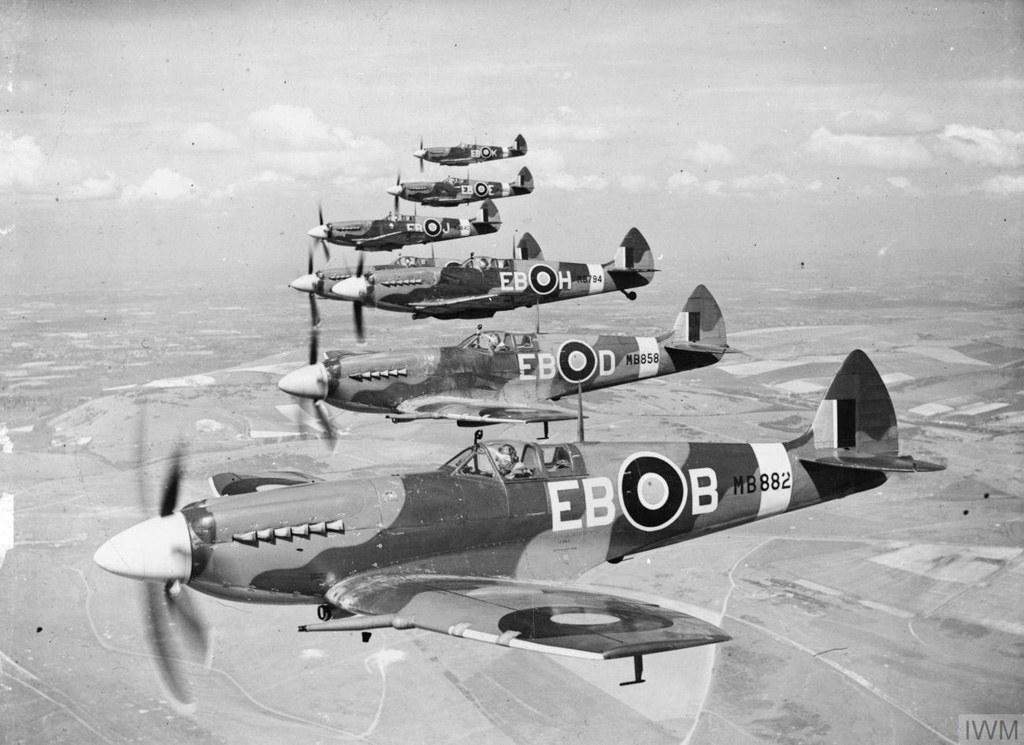
Supermarine Spitfire F Mk XIIs of No. 41 Squadron. Photo by anonymous (date unknown). PD-U.K. Government public domain. Wikimedia Commons.

Between September 1940 and July 1941, three Eagle Squadrons were formed and attached to the RAF. After the United States entered the war, the squadrons were turned over to the USAAF in late September 1942. The commander of the USAAF in Europe, Maj. Gen. Carl Spaatz (1891−1974), wanted to disperse the pilots amongst other fighter groups. However, the pilots wanted to stay together, and Gen. Spaatz agreed to their request. The three squadrons became the 334th (“Fighting Eagles”), 335th (“Chiefs”), and 336th (“Rocketeers”) Fighter Squadrons and formed the elite 4th Fighter Group (4th FG) based at RAF Debden, England.

The pilots eventually transitioned from the Spitfires to American P-47 Thunderbolts (1943−44) and P-51 Mustangs (1944−45). The 4th FG achieved the highest air/ground enemy aircraft destruction record in the USAAF. Some of the group’s accomplishments were being credited with 1,016 enemy aircraft destroyed (37 pilots became aces), the first fighter group to fly missions over Germany, the first to escort bombers over Germany, and the first to use belly tanks. Nathaniel Maranz (1919−?), an Eagle Squadron pilot, became the first American prisoner of war when he was shot down over the English Channel on 21 June 1941 and rescued by a German patrol boat.

American pilots of No. 71 “Eagle Squadron” rush to their Hawker Hurricanes at RAF Kirton-in-Lindsey. Photo by anonymous (17 May 1941). Imperial War Museum. PD-U.K. Government public domain. Wikimedia Commons.
American volunteer pilots of No. 121 Eagle Squadron playing poker in the dispersal hut at RAF Rochford in Essex. Photo by anonymous (c. August 1942).
American volunteer pilots of No. 121 Eagle Squadron playing poker in the dispersal hut at RAF Rochford in Essex. Photo by anonymous (c. August 1942). Imperial War Museum. PD-U.K. Government public domain. Wikimedia Commons.

The 4th FG is considered to have been instrumental in achieving Allied air superiority over Europe. Their final mission of World War II was on 25 April 1945. Today, the 4th Fighter Wing (assigned to the Air Combat Command’s Fifteenth Air Force) is the legacy of the Eagle Squadrons.

Click here to visit the Fourth Fighter Group WWII seb-site.

Click here to visit the American Air Museum Fourth Fighter Group WWII web-site.

Pilots of the Eagle Squadrons 

The first pilots of the Eagle Squadrons were Vernon “Shorty” Keogh (1911−1941), Andrew Mamedoff (1912−1941), and Eugene “Red” Tobin (1917−1941). The three Americans were among the first 32 volunteers recruited by Charles Sweeny, and he intended to have them join the French air force. However, Germany invaded France and the men were sent to England to join the RAF. As part of the No. 609 Squadron RAF, the men participated in the Battle of Britain earning them the Battle of Britain clasp to the 1939−45 campaign star. In September 1941, they were transferred to No. 71 Eagle Squadron. Unfortunately, all three men perished in 1941 during Eagle Squadron missions. On a side note, Mamedoff became the first American to take a “war bride” after marrying an English woman in 1941. He is also believed to be the first Jewish American pilot to have been killed in World War II (unsubstantiated).

The uniform of an American volunteer in No. 121 Eagle Squadron RAF. Photo by Daderot (4 November 2017). Oregon Air and Space Museum.
The uniform of an American volunteer in No. 121 Eagle Squadron RAF. Photo by Daderot (4 November 2017). Oregon Air and Space Museum. PD-Creative Commons CC0 1.0 Universal Public Domain Dedication. Wikimedia Commons.
Three American pilots of No. 71 Eagle Squadron RAF: Left to right: Pilot Officers G. Tobin, V.C. “Shorty” Keough, and A. Mamedoff. They are showing off their new squadron badge at RAF Church Fenton. Photo by anonymous (c. 1940). Imperial War Museum. PD-U.K. Government public domain. Wikimedia Commons.

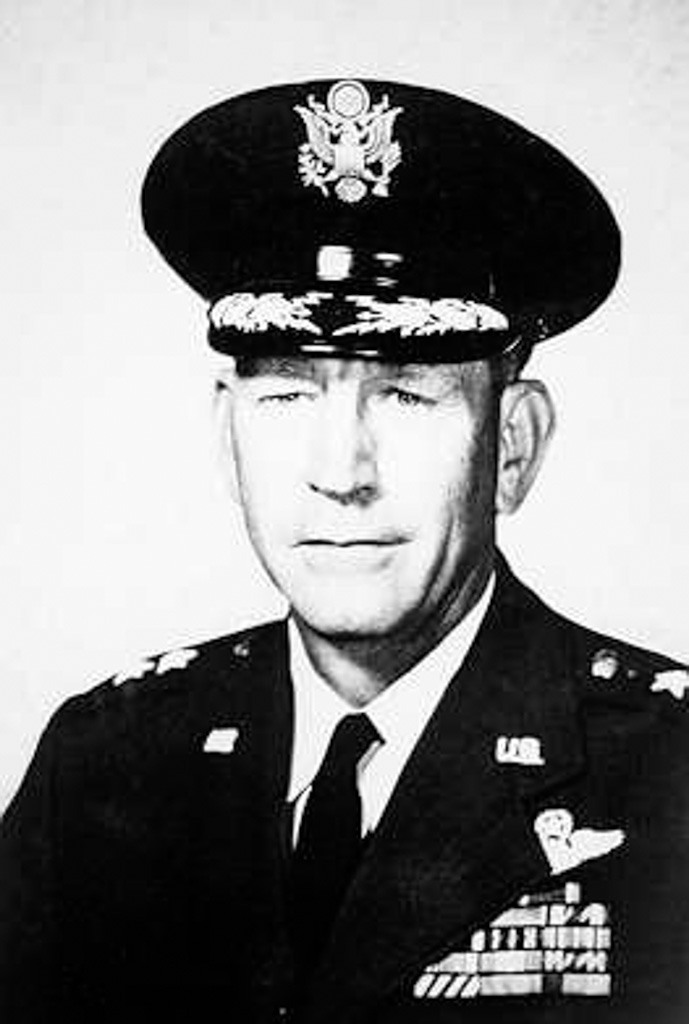
Chesley “Pete” Peterson (1920−1990) was assigned to the No. 71 Squadron upon his arrival in England in late September 1940. At the age of 21, Peterson was given command of the squadron and flew 42 missions (he flew a total of 130 missions during the war). As part of the group assigned to the USAAF 4th FG, Peterson was promoted to major and served as the FG’s executive officer. He became the youngest (age 23) colonel in the USAAF eventually rising to become a major general in 1965.
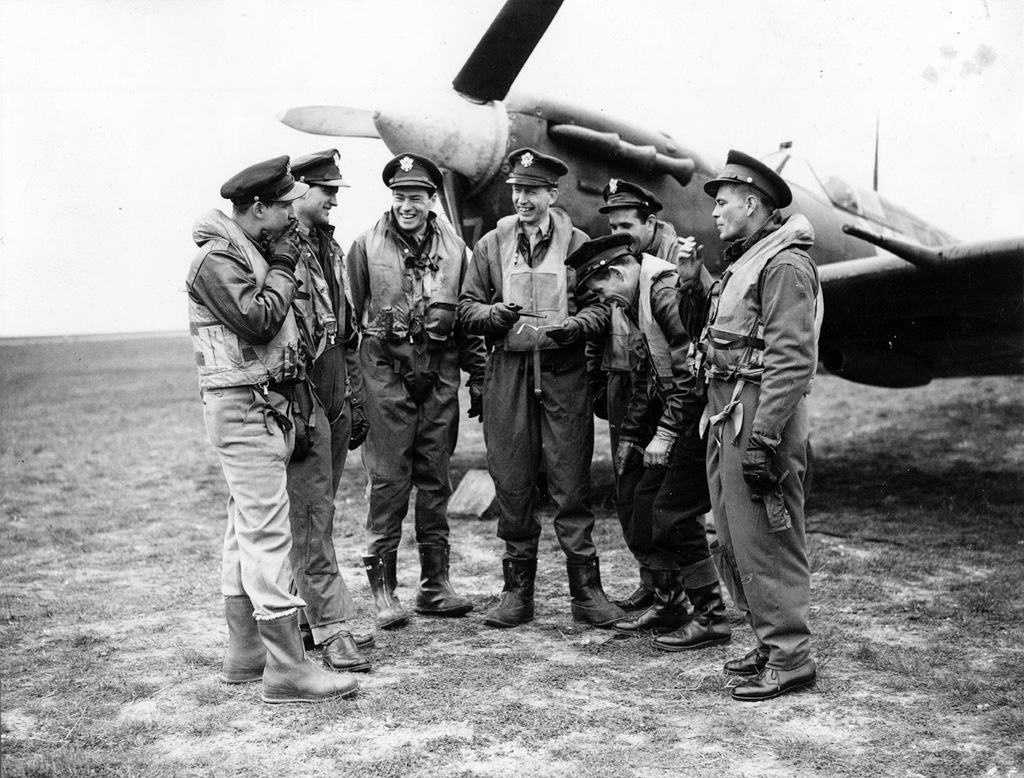
Pilots from the 4th Fighter Group in front of a Spitfire at RAF Debden airbase. The pilot in the center holding a pipe is Lt. Col. Chesley G. Peterson. The Spitfire is Peterson’s aircraft. Photo by anonymous (c. 1943). American Air Museum. PD-U.S. Government. Wikimedia Commons.
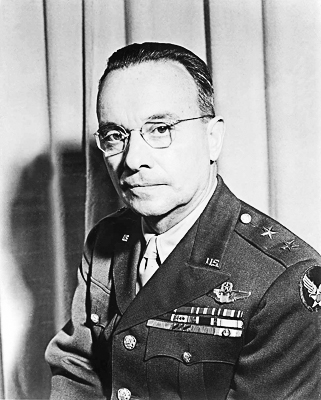
Maj. Gen. Chesley G. Peterson.
Maj. Gen. Chesley G. Peterson. Photo by anonymous (date unknown). PD-U.S. Government. Wikimedia Commons.

Donald Blakeslee (1917−2008) joined the RAF in May 1941. He quickly became known for his ability to shoot down enemy aircraft. He was assigned to the No. 133 Eagle Squadron as its commanding officer. Blakeslee quickly became an ace and has been credited with more than 500 missions flown. He is considered to be the most decorated World War II USAAF fighter pilot. His awards and honors include the Distinguished Service Cross, Silver Star, Legion of Merit, Distinguished Flying Cross, British Distinguished Flying Cross, and the French Croix de Guerre. He retired as a full colonel.
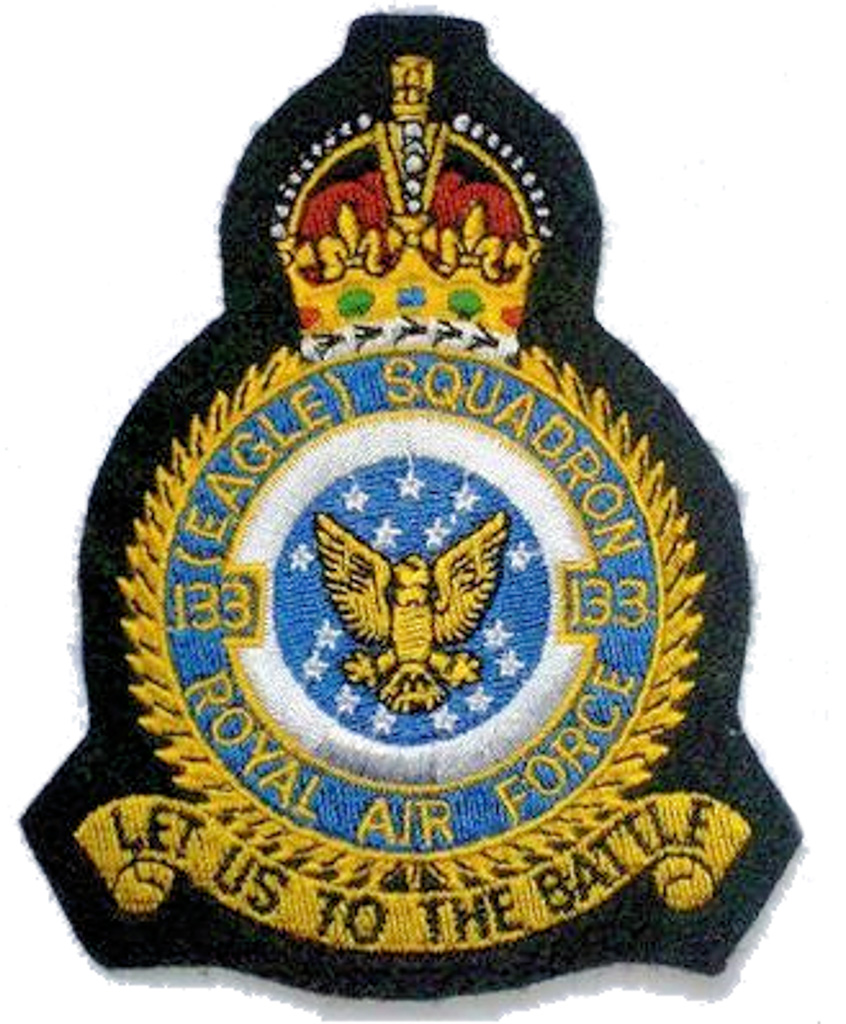
No. 133 Eagle Squadron RAF badge.
No. 133 Eagle Squadron RAF badge. Photo by anonymous (c. 1940). PD-U.K. Government public domain. Wikimedia Commons.
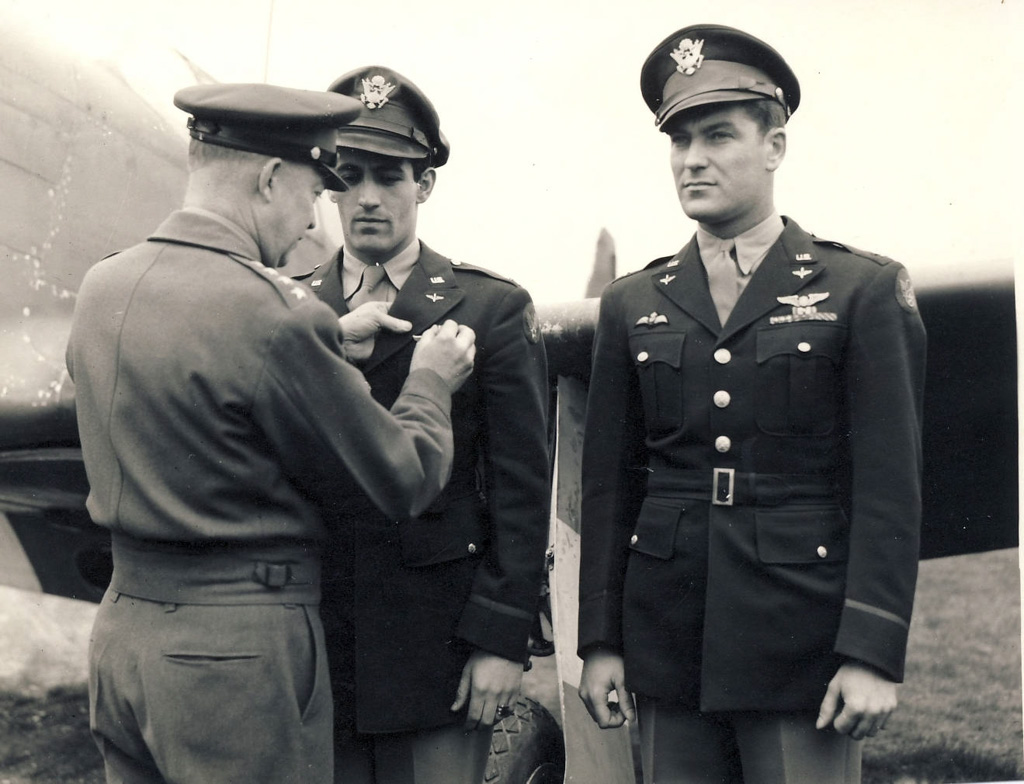
Generals gather for the occasion of the awarding of the Distinguished Service Cross to Col. Blakeslee and Capt. Gentile. Left to right: Gen. Jesse Auton, Gen. Eisenhower, Gen. Carl Spaatz, Gen. Jimmy Doolittle, Gen. Kepner, and Col. Blakeslee. Photo by anonymous (c. April 1944). PD-U.S. Government. Wikimedia Commons.

Dominic “Don” Gentile (1920−1951) almost surpassed Eddie Rickenbaker’s World War I record of 26 downed enemy aircraft. (Gentile was credited with 19.83 kills.) He flew the Supermarine Spitfire for the No. 133 Eagle Squadron before his transfer to the 4th FG where he first flew the P-47 before moving on to the P-51. On 13 April 1944, Gentile crashed his P-51 at Debden RAF while showing off for a group of journalists. Commanding Officer Blakeslee immediately grounded Gentile and sent him back to the United States to sell war bonds. He stayed in the air force after the war but in January 1951, Gentile was killed in a trainer aircraft crash.
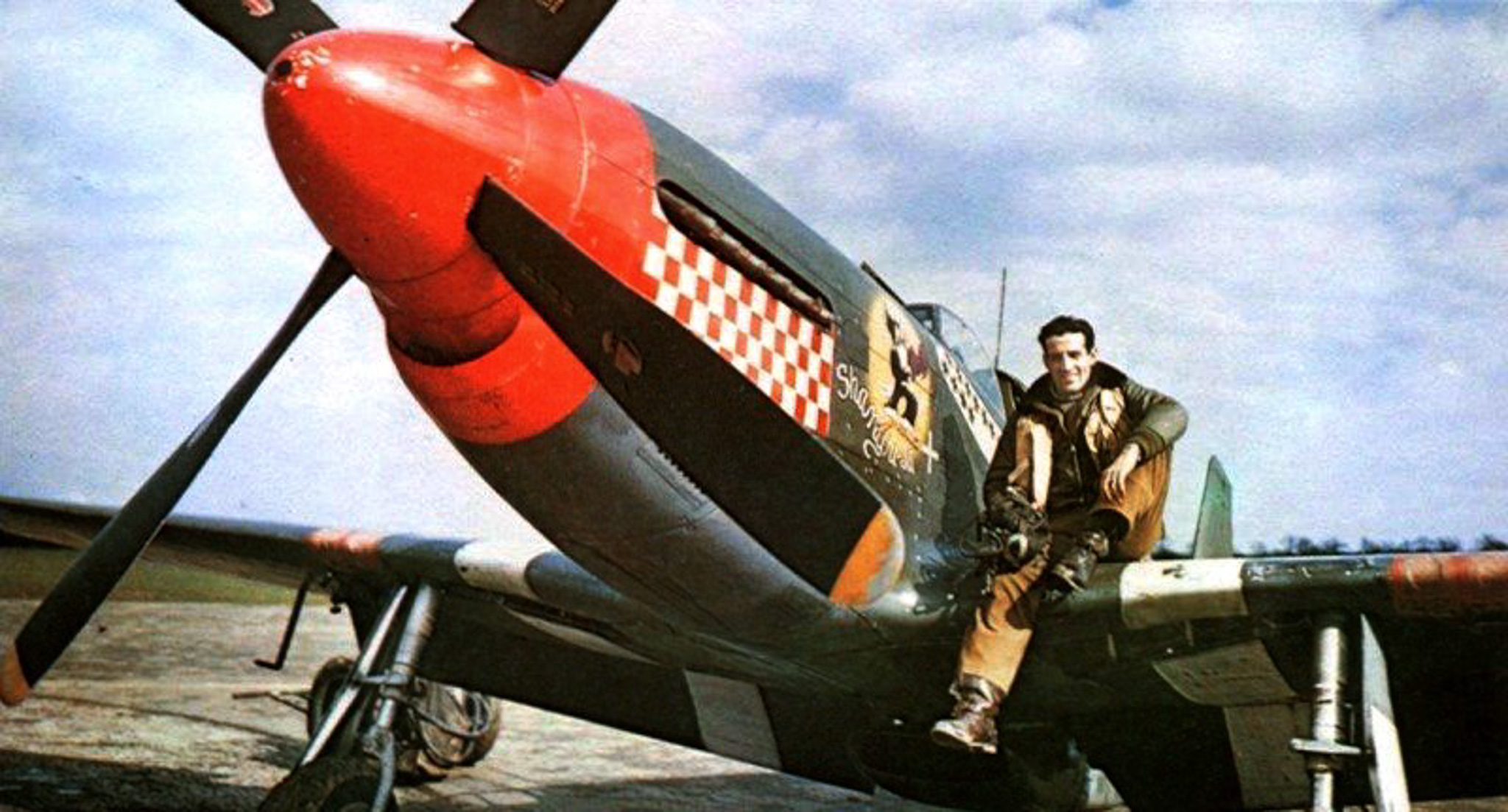
Don Gentile on the wing of his P-51B, “Shangri-La.”
Don Gentile on the wing of his P-51B, “Shangri-La.” Photo by anonymous (c. 1944). PD-U.S. Government. Wikimedia Commons.
Gen. Dwight D. Eisenhower awarding the Distinguished Service Cross to Dominic (“Don”) Salvatore Gentile (left) and Donald Blakeslee (right).
Gen. Dwight D. Eisenhower awarding the Distinguished Service Cross to Dominic (“Don”) Salvatore Gentile (left) and Donald Blakeslee (right). Photo by anonymous (11 April 1944). PD-U.S. Government. Wikimedia Commons.

The Classic Eagle Squadron March

Listen to this rousing march written specifically in memory of the Eagle Squadrons.

Click here.

Next Blog:       “SS Cap Arcona


Correspondence and Commentary Policy 

We welcome everyone to contact us either directly or through the individual blogs. Sandy and I review every piece of correspondence before it is approved to be published on the blog site. Our policy is to accept and publish comments that do not project hate, political, religious stances, or an attempt to solicit business (yeah, believe it or not, we do get that kind of stuff). Like many bloggers, we receive quite a bit of what is considered “Spam.” Those e-mails are immediately rejected without discussion.

Our blogs are written to inform our readers about history. We want to ensure discussions are kept within the boundary of historical facts and context without personal bias or prejudice.

We average about one e-mail every two days from our readers. We appreciate all communication because in many cases, it has led to friendships around the world.


★ Read and Learn More About Today’s Topic ★

Caine, Philip D. Eagles of the RAF The World War Eagle Squadrons. Washington, D.C.: National Defense University Press, 1991.

Childers, Col. James Saxon. War Eagles: The Story of the Eagle Squadron. Halstad, MN: Pickle Partners Publishing (2016). Originally published by Windmill Press, 1943.

Gentile, Don. One Man Air Force. New York: L.B. Fischer, 1944. Copyright held by North American Newspaper Alliance.

Haugland, Vern (author), Lt. Gen. Ira C. Eaker (USAF Ret.) (Foreword). The Eagle Squadrons: Yanks in the RAF, 1940−1942. New York: Ziff-Davis Flying Books (1979). Republished by TAB Books in 1992. Lt. Gen. Eaker was the model for the fictional Maj. Gen. Pat Pritchard in the 1949 movie, Twelve O’Clock High. (If you haven’t seen the movie you are missing out on probably the most realistic movie about World War II heavy bombers.)

Holmes, Tony. American Eagles: US Fighter Pilots in the RAF 1939-1945 (Images of War). Barnsley, UK: Pen & Sword Aviation Publishing, 2015.

Kan, Kenneth C. First in the Air: The Eagle Squadrons of World War II. Washington, D.C.: Air Force History and Museums Program, 2007.

Kershaw, Alex. The Few: The American “Knights of the Air” Who Risked Everything to Fight in the Battle of Britain. Boston: Da Capo Press, 2006. This book includes the stories of the first three men to join the Eagle Squadrons.


Disclaimer: 

There may be a chance that after we publish this particular blog, the video links associated with the blog are no longer accessible. We have no control over this. Many times, whoever posts the video has done so without the consent of the video’s owner. In some cases, it is likely that the content is deemed unsuitable by YouTube. We apologize if you have tried to access the link and you don’t get the expected results. Same goes for internet links.


What’s New With Sandy and Stew?

Three months after moving into our new home outside the Nashville area, we were hit with the Polar Vortex creating one of the worst ice storms the area has seen. Funny but the winter before we left Nashville some nine years ago, the worst ice storm in fifty years came through. Someone asked me if we were to blame for both. I don’t know. Two weeks after I joined a bank some forty years ago, the Challenger blew up. Two weeks after I joined another bank in late August 2001, the 9/11 terrorist attacks occurred. Trust me, I didn’t have anything to do with the Covid pandemic (that I can recall).

I have read The Wall Street Journal (WSJ) now for about fifty years. There are several sections that are of particular interest to me. One is the “Review” section every Saturday. In this section there are book reviews and I focus on non-fiction books with subjects that pertain to what I write about in our blogs and the Paris walking tour books. I have found over the years that if a book makes it to the WSJ, I can be assured it’s well-written and at least worth a look. Many of the books in my library were purchased based on their reviews.

Recently, a book caught my eye. It is Josephine Baker’s Secret War by Hannah Diamond (Yale University Press, 2025). Our 2021 blog, An African American in Paris (click here to read the blog), told the story of Josephine and her wartime exploits. For an expanded story, you might want to check out Ms. Diamond’s book.

Another book I would highly recommend is David L. Roll’s book, George Marshall: Defender of the Republic (Caliber, 2019). Gen. Marshall was an incredible person, and it would have been difficult for the Allies to win the war without him. He would have been the commander of Allied troops for the invasion of Europe, but Gen. Marshall was indispensable to President Roosevelt as his chief of staff and as such, Gen. Eisenhower was appointed Supreme Commander. This is a book I originally purchased based on the WSJ review. The personal and professional standards set by Gen. Marshall should be taught in every school. I gave each of my children a copy of this book.

Thank you to all of you who subscribe to our bi-weekly blogs. It seems there isn’t a day that goes by where we don’t increase our readership. Please let your history buff friends and family members know about our blog site and blogs.

Someone Is Commenting On Our Blogs

I have a lot of people to thank so it will take me several blogs to catch up. If I miss someone who has communicated with us (in a nice way), please don’t get mad at me for not mentioning your comments. I’m trying my best to catch up after our little sabbatical.

First and foremost, thanks to all of you who reached out to us after the last blog was published. It is good to be back, and I appreciate all of your kind comments and concerns about us.

Thanks to Edward N. for his comments on our blog, Salon Kitty (click here to read the blog). Edward is an expert in film and noted how the technical process of recording in the 1940s might have been different than what the blog mentioned.

Hazel S. contacted us about the blog, Cour des Miracles (click here to read the blog). There was an image of an illustration of a beggar that she identified as “The Man with the Twisted Lip” from Sir Arthur Conan Doyle’s short story. The artist was Sidney Paget and the story appeared in the Strand Magazine. Thanks Hazel. We have corrected the accreditation in the blog.

Monique T. wrote us about her family in response to the blog, An (extra)Ordinary Holocaust Story of Survival (click here to read the blog). Madame T. is 82-years-young and gave me permission to pass her contact information onto Marianne Golding. Marianne is from the Seidler family and is writing a book about Monique’s family and the Seidler family during World War II. It seems Monique will be able to fill in some of the unknown blanks Marianne has run into.

Paul A. is researching a particular French resistance operative and needed some information on the White Buses from the blog, Ten Gifts of the White Bus Rescue (click here to read the blog). Recall this was a guest blog written by Dr. Roger Ritvo. We were able to connect Paul and Roger. Ironically, several weeks later I received an email from Marzio A. It seems his grandfather assisted Count Bernadotte with the White Bus rescue. He took exception to the Count being called a hero and proceeded to explain what happened behind the scenes as told to him by his grandparents. An interesting twist to the accepted story.

Tim P. has been reading a lot about the French Resistance and contacted us about our blog, The Rasputin of the Abwehr (click here to read the blog). He mentioned he was going on a trip to France and asked about areas where he could visit to gain more knowledge. That’s hard to pin down when the entire country was occupied. That’s why I concentrated on Paris for my three books, Where Did They Put the Gestapo Headquarters? For example, Viriginia Hall (The Butcher of Lyon–click here to read the blog) operated in and around Lyon. Yet there really aren’t any specific sites that I know of to follow her footsteps. Same goes for Nancy Wake (The White Mouseclick here to read the blog). I do know of many resistance museums. However, the printed content accompanying the photographs and exhibits are only in French.

If there is a topic you’d like to see a blog written about, please don’t hesitate to contact me. I love hearing from you so keep those comments coming.

Share This:


Follow Stew:

1462420482_Twitter1462422248_InstagramAmazonScreen Shot 2017-10-09 at 10.20.30 AM badgeRGB

Find Stew’s books on Amazon and Apple Books.

Please contact Stew directly for purchase of books, Kindle available on Amazon. Stewross55@gmail.com or  Contact Stew on the Home Page.


Please note that we do not and will not take compensation from individuals or companies mentioned or promoted in the blogs.

Stew_Ross_Logo_CMYKWalks Through History

Copyright © 2026 Stew Ross

Posted on

“Pardon me boy, is that the Chattanooga Choo Choo?”

“Yes, yes, track 29!” answers the shoeshine boy. How many of you remember this 1941 song immortalized by the Glenn Miller and His Orchestra headlined by Tex Beneke, Paula Kelly and the Modernaires? The song was featured in the 1941 movie Sun Valley Serenade and became the first gold record awarded by the recording industry.

Click here to watch the video Glenn Miller – Chattanooga Choo Choo.

The Germans knew the only way to defend against an Allied invasion of Europe was to contain the invading army on the beaches before a permanent foothold could be gained. Failing that, the Allied ground troops would be able to expand its footprint, breakout, and begin their march to Berlin. As soon as the troops hit the beaches, German high command knew they would need to mount a rapid response with rail providing the transportation of troops as well as armaments, munitions, and other supplies.

Allied senior officers were one step ahead of the Germans. They anticipated the enemy’s next move immediately after the landings and their countermove was known as “Operation Chattanooga Choo Choo.” (Not to be confused with the 1946 “Operation Choo Choo” mission.)


ADVANCE NOTICE FOR

MY HALLOWEEN 🎃 PRESENTATION

30 OCTOBER 2024

“Cemetery Crawl:  Unearthing Parisian Legends”

Meet Some Interesting Occupants

BONJOUR PARIS

Bonjour Paris members click here.

Non-members click here, $10 fee.


Did You Know?

Did you know that six years ago, an American business executive who lives in China went to the airport for a flight to San Francisco? He got to the airport and was told he couldn’t leave the country. All the border officials told him was, “You know what you did.” Turned away, he tried another airport and was met with the same response. This man is still trapped in China.

He was the target of China’s exit ban, a legal tool used by the Chinese government to keep foreign businesspeople from leaving the country. They are never accused of a crime. It’s usually a case of a business dispute or a debt where the other side (usually a Chinese citizen) has complained to the government and the travel ban is issued.

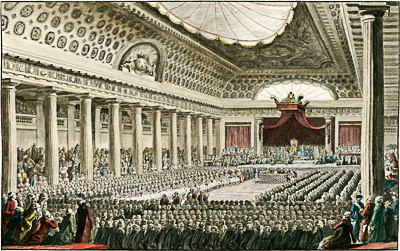
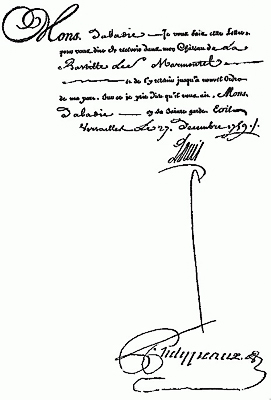
This caught my eye because it was a reminder of France’s ancien régime and the Lettres de cachet signed by the king. This was an official document that allowed the detention, imprisonment, or execution of an individual without a trial or appeal. It usually originated with a complaint from someone followed by a cash payment to the king. During the Estates General of 1789, the Third Estate’s demand for the elimination of the Lettres de cachet became one of the underlying issues that led to the French Revolution. (Refer to my book, Where Did They Put the Guillotine? Versailles to the Faubourgs: 1789−1794, Volume One.)

The opening of the 1789 Estates General in the Salle des Menus Plaisirs in Versailles. This is an idealized depiction as the actual hall was much smaller. Engraving and design by Isidore-Stanislaus Helman and Charles Monnet, respectively (5 May 1789). Bibliothèque nationale de France. PD-Author’s life plus 100 years or fewer. Wikimedia Commons.
Lettre de cachet ordering Jean-François Marmontel’s detention at the Bastille, signed in 1759 by King Louis XV and his minister/secretary, Jean-Frédéric Phèlypeaux. Photo by anonymous (c. 2011). Bastille Archives. PD-Author’s life plus 100 years or fewer. Wikimedia Commons

Operation Chattanooga Choo Choo

‘Operation Chattanooga Choo Choo’ (“Choo Choo”) was the May 1944 Allied air offensive taken against moving trains in Europe. It was part of a greater plan known as the “Transportation Plan” (i.e., the disruption and destruction of German transport and communication arteries). Although fighter planes had attacked trains and rail lines in the past, it was always with trepidation due to concern over killing innocent civilians. However, as D-Day (6 June 1944) approached, Allied command was convinced that civilian passenger rail travel had ceased and wholescale attacks were ordered based on the assumption the trains were carrying troops and armaments into France to thwart an Allied invasion of Europe.

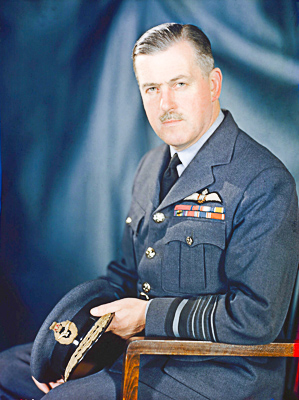
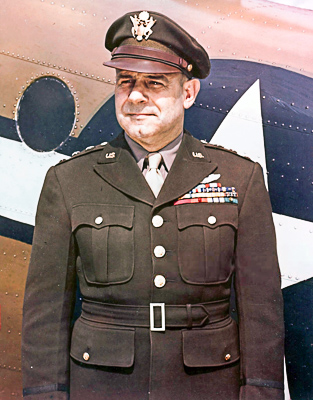
The air offensive was a combined effort of the Allied Expeditionary Air Forces led by Air Marshal Sir Trafford Leigh-Mallory (1892−1944) and supported by Lt. Gen. James Doolittle’s (1896−1993) 8th United States Army Air Force (USAAF). The mission’s objective before and after D-Day was to reduce the quantities of German equipment and men moved to France by Hitler to reinforce existing German forces fighting an Allied invasion on the beaches and the subsequent attempt to breakout.

Official British photograph of Air Chief Marshal Sir Trafford Leigh-Mallory. Photo by anonymous (c. 1994). Imperial War Museum and Ministry of Information Second World War Colour Transparency Collection. PD-Expired copyright. Wikimedia Commons.
Maj. Gen. James H. Doolittle. Photo by anonymous (c. 1944). PD-U.S. Government. Wikimedia Commons.

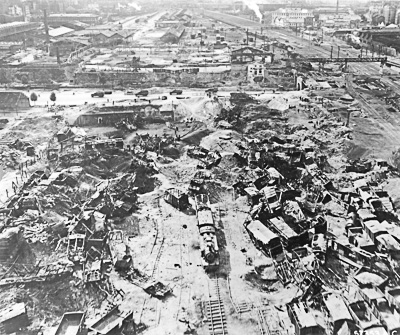
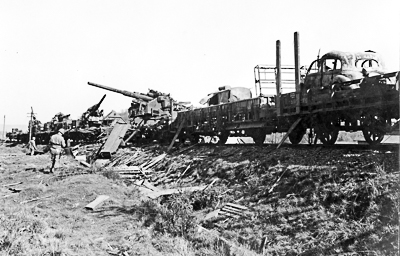
The first attacks by Choo Choo took place on 21 May 1944. The targets in Western France were railway facilities, marshalling yards, bridges, and rolling stock. Mobile rail stock was strafed and destroyed by fighter planes while the marshalling yards and bridges were attacked by fighters and medium bombers.

A Paris railroad marshaling yard destroyed before D-Day. Photo by anonymous (c. May 1944). National Museum of the United States Air Force. PD-U.S. Government.
A Paris railroad marshaling yard destroyed before D-Day. Photo by anonymous (c. May 1944). National Museum of the United States Air Force. PD-U.S. Government. https://www.nationalmuseum.af.mil

Two weeks after the first attack, about 475 locomotives had been destroyed and the French rail system in the targeted area had been cut at 150 strategic different points.

Click here to watch the video Operation Chattanooga Choo Choo.

Fighter Bombers

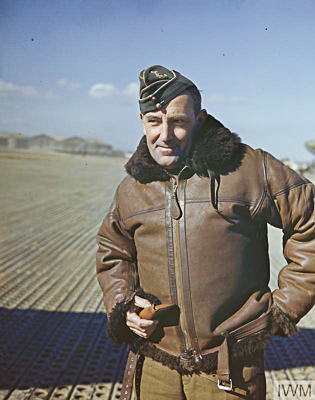
Leigh-Mallory’s command included the British 2nd Tactical Air Force (“2TAF”) led by Air Marshal Sir Arthur Coningham (1895−1948) and Lt. Gen. Lewis Brereton’s (1890−1967) 9th USAAF.  Supporting Leigh-Mallory’s bombers were Doolittle’s fighter planes including new P-51s. Formed in June 1943, the 2TAF was to prepare bomber and fighter commands for the invasion of Europe. In January 1944, Coningham took over command and installed the fast moving ground warfare strategies he successfully employed in North Africa and Italy. Planes used by the 2TAF included medium and light bombers as well as attack fighters such as the Spitfire. When formed, 2TAF’s primary functions were to support army ground troops and establish air superiority. (By 1944, the German Luftwaffe was essentially a shell of what it once had been, and Hitler had lost confidence in Hermann Göring.)

Air Chief Marshal Sir Arthur Coningham standing on a perforated steel runway in the Italian theater shortly before he returned to England to take up his duties as Air Officer Commanding 2TAF. Photo by anonymous (c. 1944). Imperial War Museum and Ministry of Information Second World War Colour Transparency Collection.
Official photo of Maj. Gen. Brereton. Photo by anonymous (date unknown). PD-Expired copyright. Wikimedia Commons.
Official photo of Maj. Gen. Lewis Brereton. Photo by anonymous (date unknown). PD-Expired copyright. Wikimedia Commons.
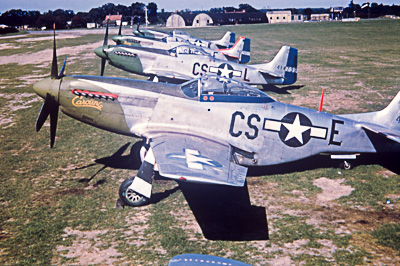
P-51 “Mustang” fighter planes lined up at RAF East Wretham. Photo by anonymous (c. 1944). Imperial War Museum. PD-Published without a copyright notice. Wikimedia Commons.
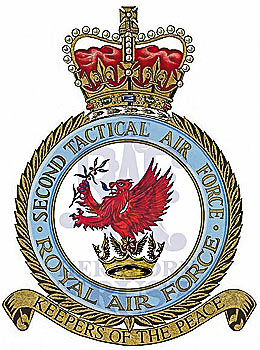
Official badge of the 2nd Tactical Air Force. Illustration by RAF Heraldy Trust (c. 2005). PD-Expired copyright. Wikimedia Commons.

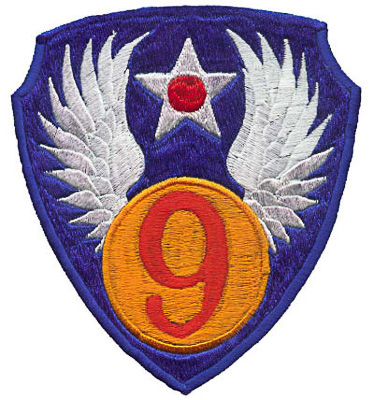
The 9th USAAF originated on 8 April 1942 and by 1944 was a tactical fighter command unit engaging enemy forces in Europe. After his appointment, Lt. Gen. Brereton expanded the ninth including accepting medium bombers from the 8th USAAF. By the time of Choo Choo, the ninth consisted of forty-five groups with more than 5,000 aircraft. Lt. Gen. Brereton’s men participated in Operation Pointblank (bomber offensive against German aircraft industry) and Operation Crossbow (operations aimed at German V-weapon sites) before supporting 2TAF and the invasion forces.

9th USAAF emblem patch. Photo transferred by Sfan00_IMG (c. 2006). PD-U.S. Government. Wikimedia Commons.

The 8th USAAF, or “Mighty Eighth” was established as VIII Bomber Command in early 1942 and by February 1944, it was renamed. At that time, the USAAF was reorganized, and Lt. Gen. Doolittle took over command of the eighth. Primarily using B-17s and B-24 Liberators, the Mighty Eighth’s responsibilities included strategic bombing by the heavy and medium bombers. The initial introduction of the P-51s to the eighth was to escort the bombers into Germany. (The P-51s were the first fighter planes with the range to get to and from Germany.) However, Lt. Gen. Doolittle released his fighter pilots to actively pursue and destroy enemy aircraft ensuring Allied air superiority over Europe.

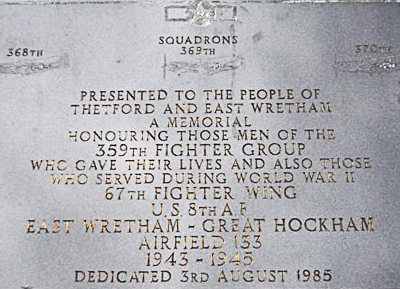
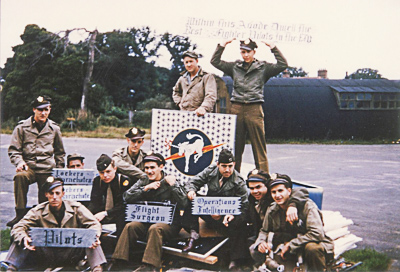
One of the eighth’s successful fighter groups was the 359th with its three fighter squadrons (368th, 369th, and 370th). Entering combat in late 1943 and based at RAF East Wretham, aircraft from the fighter squadrons primarily flew escort missions. With the conversion from P-47 Thunderbolt aircraft to the P-51s in April 1944, the group was unleashed for direct strafing and bombing attacks on airfields, rail centers, locomotives, and rail lines. Between December 1943 and April 1945, the three fighter squadrons flew 346 missions over Europe with a total loss of 121 pilots while claiming 373 enemy aircraft in aerial combat and strafing attacks.

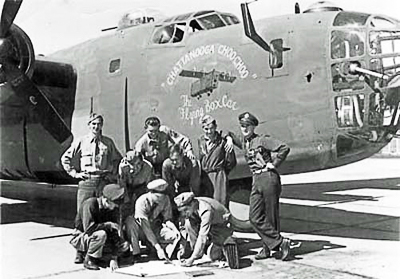
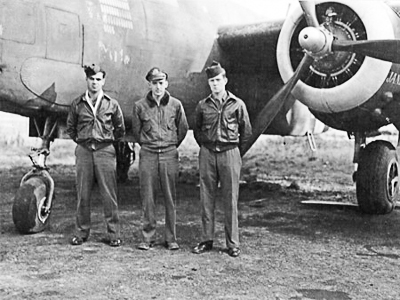
Crew of the B-24 Liberator “Chattanooga Choo Choo – The Happy Box Car” (#42-40782). The plane crashed over Romania on its return from a bombing mission. One crew member was killed with the others taken prisoner. Photo by anonymous (date unknown). American Air Museum in Britain.
Crew of the B-24 Liberator “Chattanooga Choo Choo – The Happy Box Car” (#42-40782). The plane crashed over Romania on its return from a bombing mission. One crew member was killed with the others taken prisoner. Photo by anonymous (date unknown). American Air Museum in Britain. https://www.americanairmuseum.com
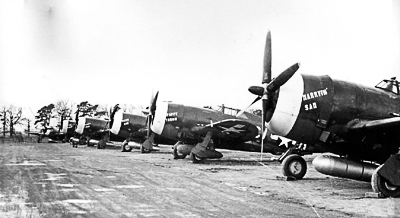
P-47 “Thunderbolts” of the 359th Fighter Group lined up at RAF East Wretham. Photo by anonymous (c. 1944). National Archives via the United States Air Force Historical Research Agency. PD-U.S. Government. Wikimedia Commons.

Other Choo Choo Missions 

As part of Choo Choo, other areas of Europe were strategically targeted to break German logistics. Simultaneous to the western France attacks, 763 of Leigh-Mallory’s British 2nd Tactical Air Force fighter-bombers swept over northern France while 500 P-51s of the 8th USAAF flew over Germany destroying trains. On 25 May, three fighter groups of the 9th USAAF operated over the Rhineland while at the same time, more than 600 8th USAFF fighter-bombers targeted and destroyed trains traveling through Belgium.

Aftermath of a successful mission by the 9th USAAF. Photo by anonymous (c. 1944). National Museum of the United States Air Force. PD-U.S. Government.
Aftermath of a successful mission by the 9th USAAF. Photo by anonymous (c. 1944). National Museum of the United States Air Force. PD-U.S. Government. https://www.nationalmuseum.af.mil

A major mission was conducted on 29 May when 571 planes of the 8th USAAF went into eastern Germany and Poland. During the June days leading up to the invasion, the 9th USAAF sent their planes into France to “soften up” the German transports.

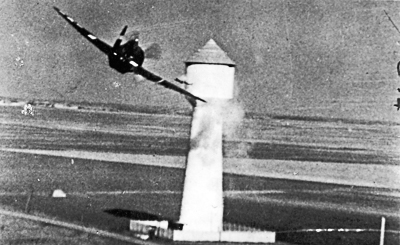
P-47 “Thunderbolt” from the 8th USAAF attacking a German antiaircraft (“flak”) tower. Photo by anonymous (c. May 1944). National Museum of the United States Air Force. PD-U.S. Government.
P-47 “Thunderbolt” from the 8th USAAF attacking a German antiaircraft (“flak”) tower. Photo by anonymous (c. May 1944). National Museum of the United States Air Force. PD-U.S. Government. https://www.nationalmuseum.af.mil

There were two immediate by-products of these bombing and strafing missions. First, the young fighter pilots gained valuable experience in strafing techniques that was to show dividends after the Allied troops broke out of Normandy in July and August1. Second, the psychological effects on the French rail personnel resulted in large numbers of desertions by French train crews. One of the tactics used by the pilots was to drop belly tanks on stalled trains and then ignite the spilled fuel by strafing. As the French abandoned their rail jobs, German crews and forced labor were brought in but ultimately, railroad operations were drastically reduced even on undisturbed tracks.

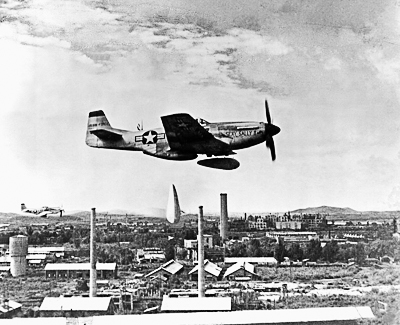
USAF F-51D Mustangs dropping tanks repurposed as napalm bombs during the Korean conflict. Photo by anonymous (date unknown). https://www.wearethemighty.com
1 – My uncle was a P-47 “Thunderbolt” pilot. One of his recollections was of the young pilots who, after completing a strafing mission, went back to assess the damage. Many of these inexperienced pilots were killed by German anti-aircraft armaments once the element of surprise was gone. His policy was that once the mission was completed, always return to base.
A-20 light bomber crew of the 410th Bombardment Group. Photo by anonymous (c. 1944). Army Air Corps Museum.
A-20 light bomber crew of the 410th Bombardment Group. Photo by anonymous (c. 1944). Army Air Corps Museum. https://www.armyaircorpsmuseum.org.
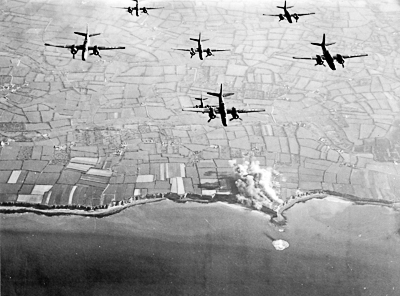
A-20 light bombers strike the Pointe du Hoc strongpoint in Normandy. Photo by anonymous (c. May 1944). National Museum of the United States Air Force. PD-U.S. Government.
A-20 light bombers strike the Pointe du Hoc strongpoint in Normandy. Photo by anonymous (c. May 1944). National Museum of the United States Air Force. PD-U.S. Government. https://www.nationalmuseum.af.mil

Operation Bodyguard 

While Operation Chattanooga Choo Choo was successful at frustrating German efforts to move troops and armaments into position to meet the invasion head-on, there was another operation that contributed to the success of the Normandy invasion. Operation Bodyguard was the overall mission to deceive Hitler into thinking the “first” invasion would be a diversionary landing with the “real” invasion taking place at another location. One of Bodyguard’s operations was “Operation Double Cross” (click here to read the blog, The Double Cross System). Using highly effective double agents, Double Cross tricked Hitler into thinking the Normandy invasion would be the diversion with Pas-de-Calais as the site of the main invasion weeks later. (Gen. Omar Bradley called Operation Double Cross “the greatest deception of World War II.”)

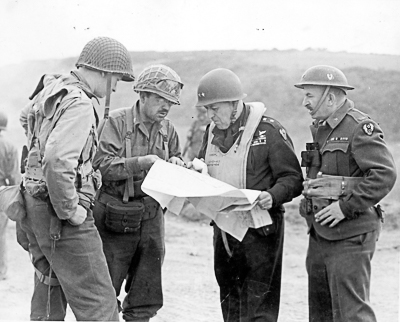
Maj. Gen. Ralph Royce (second from right), 9th USAAF deputy commander, with engineers on the Normandy beachhead one day after D-Day. Photo by anonymous (7 June 1944). National Museum of the United States Air Force. PD-U.S. Government.
Maj. Gen. Ralph Royce (second from right), 9th USAAF deputy commander, with engineers on the Normandy beachhead one day after D-Day. Photo by anonymous (7 June 1944). National Museum of the United States Air Force. PD-U.S. Government. https://www.nationalmuseum.af.mil
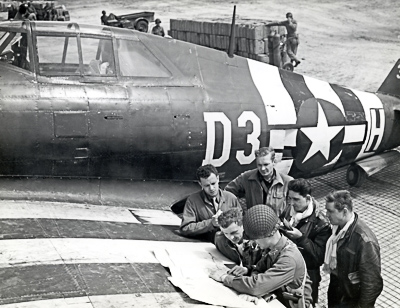
P-47 fighter-bomber pilots at a rough airstrip near Sainte-Mère-Église. Photo by anonymous (c. 1944). National Museum of the United States Air Force. PD-U.S. Government.
P-47 fighter-bomber pilots at a rough airstrip near Sainte-Mère-Église. Photo by anonymous (c. 1944). National Museum of the United States Air Force. PD-U.S. Government. https://www.nationalmuseum.af.mil
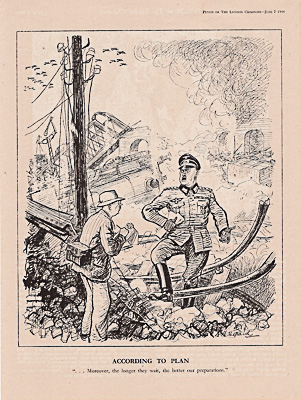
Cartoon shortly after D-Day reflecting destruction by Allied air forces. “ACCORDING TO PLAN . . . Moreover, the longer they wait, the better our preparations.” Illustration by Shepard (c. June 1944). Punch or The London Charivari; 7 June 1944, page 477. Author’s collection.

Hitler waited two weeks to move the bulk of his tanks and men to Normandy but by then it was too late. In the meantime, German commanders were frustrated by cuts in communication lines (due primarily to the efforts of the French resistance) and the destruction of roads, rail lines, rolling stock, and rail bridges (thanks to Operation Chattanooga Choo Choo).

Memorial plaque dedicated (3 August 1985) to the men of the 359th Fighter Group who served at RAF East Wretham and those who lost their lives. Photo by anonymous (date unknown). Traces of War blog.
Memorial plaque dedicated (3 August 1985) to the men of the 359th Fighter Group who served at RAF East Wretham and those who lost their lives. Photo by anonymous (date unknown). Traces of War blog. https://www.tracesofwar.com
Personnel of the 359th Fighter Group with the insignia of the 370th Fighter Squadron and signage that has been taken down at RAF East Wretham during V-E Day celebrations. Photo by anonymous (7 May 1945). WW2 Airfields Archive.

Next Blog:         “The Strangest Battle of World War II”


Correspondence and Commentary Policy 

We welcome everyone to contact us either directly or through the individual blogs. Sandy and I review every piece of correspondence before it is approved to be published on the blog site. Our policy is to accept and publish comments that do not project hate, political, religious stances, or an attempt to solicit business (yeah, believe it or not, we do get that kind of stuff). Like many bloggers, we receive quite a bit of what is considered “Spam.” Those e-mails are immediately rejected without discussion.

Our blogs are written to inform our readers about history. We want to ensure discussions are kept within the boundary of historical facts and context without personal bias or prejudice.

We average about one e-mail every two days from our readers. We appreciate all communication because in many cases, it has led to friendships around the world.


★ Read and Learn More About Today’s Topic ★

Fogg, Janet and Charlotte Baldridge. A Manifest Spirit: The 359th Fighter Group 1943−1945. Self-published: FA LLC, 2017.

Freeman, Roger. The Mighty Eighth: A History of the Units, Men and Machines of the US 8th Air Force. U.K.: Arms & Armour Press, 2004. First published by Doubleday, 1970.

Military code names from World War II:  Click here.

Shores, Christopher. 2nd Tactical Air Force, Vol. 1: Spartan to Normandy, June 1943 to June 1944. Shepperton, U.K.: Ian Allen Publishing, 2004.

Smith, Jack H. 359th Fighter Group. Oxford: Osprey Publishing, 2012.

Wolmar, Christian. The Liberation Line: The Untold Story of How American Engineering and Ingenuity Won World War II. New York: Hachette Books, 2024.

Disclaimer: 

There may be a chance that after we publish this particular blog, the video links associated with the blog are no longer accessible. We have no control over this. Many times, whoever posts the video has done so without the consent of the video’s owner. In some cases, it is likely that the content is deemed unsuitable by YouTube. We apologize if you have tried to access the link and you don’t get the expected results. Same goes for internet links.

What’s New With Sandy and Stew?

Sandy and I visited Copenhagen on the back end of our Baltic cruise. While it was her first time in the city, I had visited there many times in the 1960s while attending Viking Summer Camp. Our big excursion at the end of the six-week camp stay was the trip to Copenhagen and sites around the city. The highlight of our excursion was Tivoli Gardens. As an eleven-year-old, experiencing the hundred-year-old rollercoaster was a huge excitement! After our high school graduation in 1973, I returned to Copenhagen with my good friend Harry M.  We visited Tivoli and rode the same coaster I had been on seven years earlier. Unfortunately, as an eighteen-year-old, I did not experience the same thrills I recalled from my time as a Viking camper.

The first ride Sandy and I went on after entering the park was the 150-year-old roller coaster. It hadn’t changed one iota. The line wasn’t long, and we jumped into the car, strapped ourselves in, and took off. With Sandy next to me I felt twelve-years-old again and after the first dip, flashed back to 1967.

I promised Sandy a smorgasbord of Danish pastries while in Copenhagen – another fond memory of a pre-teenage boy. Unfortunately, I was not able to fulfil this promise as we did not come across many pastry shops – perhaps during the past fifty years people decided to eat healthier? I guess we will just have to go back to Paris and visit our favorite boulangeries.

Thank you to all of you who subscribe to our bi-weekly blogs. It seems there isn’t a day that goes by where we don’t increase our readership. Please let your history buff friends and family members know about our blog site and blogs.

Someone Is Commenting On Our Blogs

Thanks to Suzanne A. for reaching out to us regarding our 2022 blog, Murder by Willful Neglect. Suzanne lives in Germany in a village close to the former Velpke children’s home (between Wolfsburg and Helmstedt). She did not know the story of the home and its connection to her village. After reading the blog, Suzanne began to investigate and found information that made her very uncomfortable. She is grateful that her view on local history is now clearer.

I am always encouraged when people like Suzanne write to us with these types of comments. It tells me that we are accomplishing one of our goals in writing these blogs over the past twelve years.

If there is a topic you’d like to see a blog written about, please don’t hesitate to contact me. I love hearing from you so keep those comments coming.


Share This:


Follow Stew:

1462420482_Twitter1462422248_InstagramAmazonScreen Shot 2017-10-09 at 10.20.30 AM badgeRGB


Find Stew’s books on Amazon and Apple Books.

Please contact Stew directly for purchase of books, Kindle available on Amazon.  Stew.ross@Yooperpublications.com or  Contact Stew on the Home Page.


Shepherd logo.jpg

Shepherd.com is like wandering the aisles of your favorite bookstore.

Do you enjoy reading? Do you have a hard time finding the right book in the genre you enjoy? Well, Ben at Shepherd.com has come up with an amazing way to find that book.

Shepherd highlights an author (like me) and one of their books. The author is required to review five books in the same genre. So, if a reader is interested say in cooking, they can drill down and find specific books about cooking that have been reviewed by authors in that category. Very simple.

If you like to read, I highly recommend you visit Shepherd.com. If you do, please let me know what you think and I will forward Ben any suggestions or comments you might have.

Click here to visit Shepherd’s website.

Click the books to visit Stew’s bookshelf on WWII.

Image 11-16-22 at 10.38 AM

Check out Stew’s bookshelf on the French Revolution.

Shepherd FR Bookshelf


Please note that we do not and will not take compensation from individuals or companies mentioned or promoted in the blogs.

Stew_Ross_Logo_CMYKWalks Through History


Copyright © 2024 Stew Ross